Tech
How Talking Photo Technology Is Changing the Way We Tell Stories Online

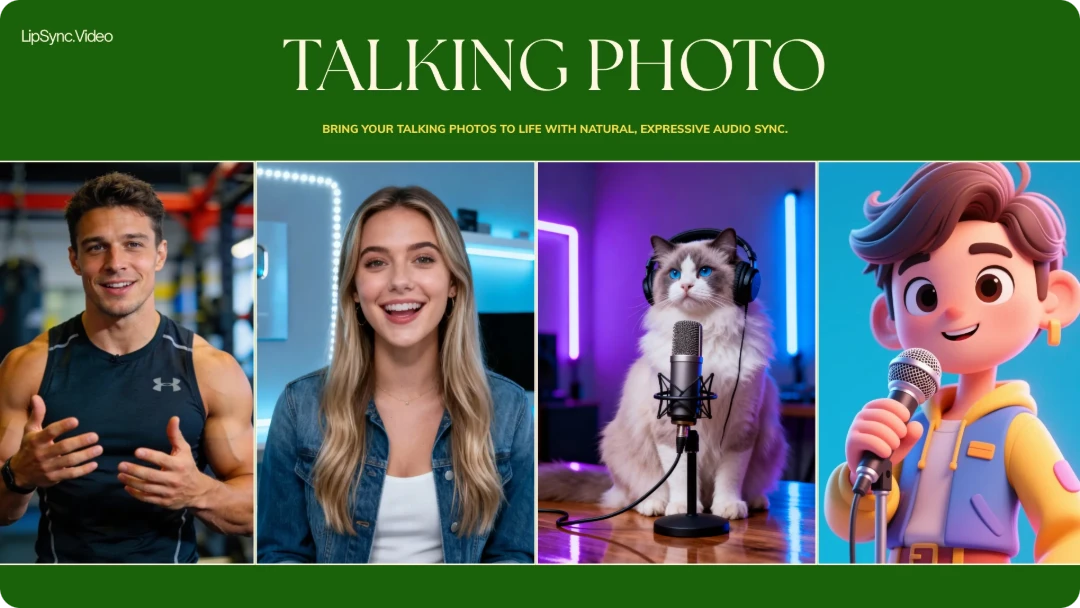
We’ve all been there — you have a powerful message, a product to introduce, or a memory worth preserving, but video feels out of reach. No studio, no camera crew, no time to rehearse. For years, that friction kept countless ideas locked in a draft folder.
That gap is closing fast, thanks to a new category of AI tools built around talking photo technology — and the results are reshaping how individuals, educators, and brands communicate.
What Is a Talking Photo — and Why Does It Actually Matter?
A talking photo is exactly what it sounds like: a still portrait image that’s been animated to speak. Upload a face, feed it audio or a text script, and the AI generates a short video where the subject’s lips, jaw, and subtle facial muscles move in natural synchronization with the words.
It sounds like a neat trick. In practice, it’s a genuine workflow transformation.
Consider a few real-world situations:
- A small business owner wants to add a personalized video greeting to her email newsletter but doesn’t own a ring light or feel comfortable on camera.
- An online course creator needs to localize his content into Spanish for a new market — his face and brand recognition should stay consistent, but the audio changes.
- A nonprofit is building a memorial tribute for a donor event and wants to bring archival photos of founders to life without resorting to clunky slideshows.
None of these people need Hollywood production. They need a result that feels human, looks credible, and can be produced in an afternoon.
The Real Friction Behind “Just Record a Video”
There’s an assumption baked into modern content advice: just turn on your camera and talk. But camera confidence isn’t evenly distributed, and production overhead isn’t trivial.
Studies on remote work communication suggest that a significant portion of professionals feel noticeably more self-conscious on video than in writing or audio — and that anxiety compounds when multiple takes, lighting adjustments, and editing cycles enter the equation.
Talking photo technology sidesteps this entirely. You’re not asking someone to perform. You’re giving them a tool that lets their message stand on its own.
How Talking Photo Generators Work in Practice
Modern AI talking photo generators use a combination of facial landmark detection, generative video models, and audio-to-phoneme mapping to create lip-synced animation from a single static image. The process typically involves three steps:
Step 1 — Upload a Clear Portrait
The image quality matters more than most people expect. A well-lit, forward-facing photo with clear lip and jaw lines gives the model more to work with. You don’t need a professional headshot — a good smartphone photo in natural light is enough.
Step 2 — Provide Your Audio or Script
This is where the real flexibility lives. You can upload a pre-recorded voiceover (your own voice, a client’s, a voice actor’s), or you can type a script and let the platform’s text-to-speech engine handle it. Some tools support multiple languages, letting you generate the same face speaking in French, Mandarin, or Portuguese with a simple audio swap.
Step 3 — Generate and Export
Processing typically takes a few minutes. The output is a video clip — usually MP4 — ready to drop into an email, presentation, social post, or website embed.
Talking Photo in Real Scenarios: Who’s Actually Using This
E-commerce and personal branding. Product founders who aren’t comfortable on camera are using talking photos to create intro videos for their Shopify stores or Gumroad pages. A static headshot becomes a 30-second “hi, here’s what I built and why” — without a single take.
Language education. Tutors and edtech developers are building multilingual explainer content using a single presenter photo matched to different audio tracks. One image, five language versions, a fraction of the cost of re-recording with native speakers.
Corporate communications. HR teams are experimenting with talking photo content for internal updates — a department head’s photo delivers a quarterly message without requiring calendar coordination for a video shoot.
Memory and legacy projects. Families are animating old photographs of relatives for birthdays, memorial services, and heritage projects. This use case, in particular, carries emotional weight that few other AI tools touch.
Choosing a Talking Photo Tool That’s Worth Your Time
The category is growing quickly, and not all tools deliver the same fidelity. The gap between a convincing result and an uncanny-valley misfire often comes down to:
- Lip sync accuracy — does the mouth movement match phonemes naturally, or does it feel mechanical?
- Head and micro-expression movement — small natural movements (blinking, slight head tilt) separate lifelike from robotic
- Audio flexibility — can you bring your own voice, or are you locked into synthetic options?
- Output resolution — for professional use, 1080p minimum is the baseline expectation
LipSync Video addresses each of these directly, with a portrait-to-video pipeline that handles natural facial motion alongside the lip sync layer, which is the part that usually looks artificial in lower-quality implementations.
The Broader Shift This Represents
Talking photo technology is one branch of a larger trend: AI tools that lower the floor on video production without raising the ceiling on what’s possible. The goal isn’t to replace authentic human video. It’s to give more people access to a format that was previously gated behind equipment, confidence, and time.
A nonprofit with a $200 monthly tool budget shouldn’t have to choose between video and everything else. A solopreneur shouldn’t have to hire a videographer to introduce themselves to a new audience. A teacher in a rural district shouldn’t need a production studio to reach students in their language.
These aren’t edge cases. They’re the majority of people who actually need video — and who, until recently, were left out of the conversation.
Final Thought
The question isn’t whether talking photo technology is “good enough” anymore. For a growing number of use cases, it already exceeds what most people can produce on their own. The more interesting question is what you’d build — or say — if the camera were no longer the obstacle.










How to Build a Timeless Personal Style in a World of Fast-Changing Fashion Trends

Healing the Whole Person: The Ultimate Guide to Dual Diagnosis Treatment at LIV Recovery Center

Do Watch Colors Match Seasons?

Choosing the Right Cavitation Machine: What Every Clinic Owner Should Know Before Buying

How to Spot a More Trustworthy Phone Tarot Service
Beware, the cult that victimized teenagers has brought its performances to Japan

How Does the FRM Exam Help Build a Career in Risk Analytics?

What Happens When You Stop Taking Ozempic For Weight Loss?

Generative Furniture Modeling Review 2026: Automating Prototyping Workflows
Why Healthcare Press Releases Need Regulatory Awareness
How to Build a Timeless Personal Style in a World of Fast-Changing Fashion Trends
Healing the Whole Person: The Ultimate Guide to Dual Diagnosis Treatment at LIV Recovery Center
Do Watch Colors Match Seasons?
Choosing the Right Cavitation Machine: What Every Clinic Owner Should Know Before Buying
How to Spot a More Trustworthy Phone Tarot Service
Beware, the cult that victimized teenagers has brought its performances to Japan
How Does the FRM Exam Help Build a Career in Risk Analytics?
What Happens When You Stop Taking Ozempic For Weight Loss?
Generative Furniture Modeling Review 2026: Automating Prototyping Workflows
Why Healthcare Press Releases Need Regulatory Awareness

The Private World of Marina Pearl LeBlanc, Matt LeBlanc’s Only Child

What is Shoujo Ramune? The Comprehensive Guide

Who is Christina Erika Carandini Lee? Everything About Christopher Lee’s Daughter

The Untold Truth of William Mapel: A Deep Dive into His Personal Life

Who is Amra Nor Jenkins? The Untold Story About Jeezy’s Daughter

Who is Nicoletta Ruhl? Age, Family, Bio

The Rise of Ryan Nikolaos Sampras: From Humble Beginnings to Stardom

The Untold Story of Denika Kisty: Her Family, Net Worth, and More

William Givens Jensen Today: What We Know About Robin Givens’ Son

Meet Dominique Boxley: Anthony Fantano’s Mysterious and Supportive Partner
-
 Celebrity1 year ago
The Private World of Marina Pearl LeBlanc, Matt LeBlanc’s Only Child
-
 Entertainment2 years ago
What is Shoujo Ramune? The Comprehensive Guide
-
 Celebrity2 years ago
Who is Christina Erika Carandini Lee? Everything About Christopher Lee’s Daughter
-
 Celebrity2 years ago
The Untold Truth of William Mapel: A Deep Dive into His Personal Life
-
 Life Style2 years ago
Who is Amra Nor Jenkins? The Untold Story About Jeezy’s Daughter
-
 Life Style2 years ago
Who is Nicoletta Ruhl? Age, Family, Bio
-
 Celebrity2 years ago
The Rise of Ryan Nikolaos Sampras: From Humble Beginnings to Stardom
-
 Celebrity2 years ago
The Untold Story of Denika Kisty: Her Family, Net Worth, and More