Blog
The Growing Popularity of Nostalgic Visual Styles in Games

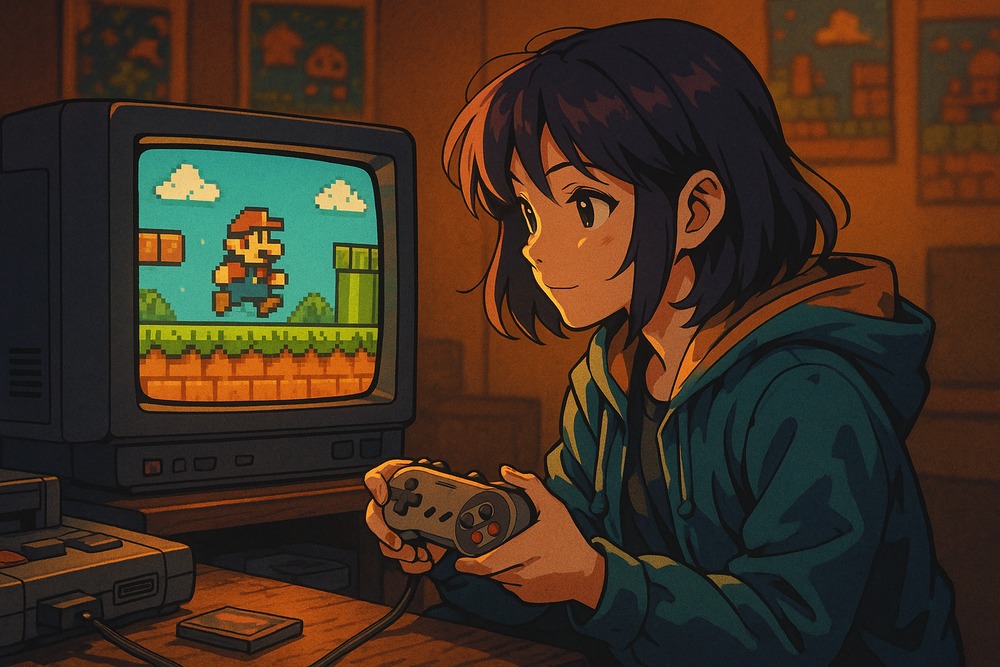
Modern games can look almost lifelike now, but visual progress has never been a one-way street. Retro-leaning styles continue to return because there is a real market for them, supported by players who actively seek out and appreciate these looks. Pixel art and stylized worlds have lasting appeal because they feel expressive, readable, and intentionally designed rather than simply outdated.
With that demand in place, developers have room to treat retro visuals as a deliberate creative choice. The style can reinforce a game’s identity, communicate clearly on screen, and remain easy to read in motion or on storefronts where the first impression needs to land quickly. These factors help explain why retro-inspired visuals keep attracting attention.
Nostalgia Has Become a Visual Shortcut for Clarity
Nostalgia has become a visual shortcut for clarity, helping keep screens clean and easy to read. Pixel art, low-poly shapes, and stylized sprites allow important elements to stand out without adding clutter. Many developers choose retro visuals deliberately, not because they are constrained by old technology.
In online casino games, this approach is particularly useful. Titles like Sonic 77 Sevens use arcade-style aesthetics to make symbols and feature cues readable at a glance, even with multiple animations happening simultaneously. Slots often lean into nostalgic themes because the format has a long history, and classic iconography still works well on modern screens. From the lobby tile to the main game screen, retro-inspired designs keep gameplay clear and engaging.
Retro Art Fits Today’s Production Pipelines
Nostalgic visuals are popular because they scale with modern production planning. Pixel and sprite pipelines are modular, allowing developers to set rules for tiles, character sets, animation timing, and reuse patterns across large content. This accelerates iteration and lowers the risk of late visual rework, especially for small teams aiming for consistent quality.
Another key factor is controllable scope. Stylised retro art can be impressive without needing high-density assets for every surface, prop, and background. This is part of why 2D and retro-leaning art is often discussed as thriving rather than fading, even as hardware power rises. The style provides developers with a predictable ceiling for asset complexity, helping schedules stay more stable when features change.
Remakes and Remasters Keep Resetting the Lookbook
The industry’s steady flow of remakes, remasters, and rereleases keeps older visual languages in active rotation. Each wave introduces a new audience to the visual style of a particular era, while new projects borrow those cues and combine them with modern controls and gameplay systems. Coverage of recent years continues to frame remakes and remasters as an ongoing publishing trend rather than a one-off cycle.
This also shapes executive decision-making. Analysts and trade coverage have highlighted how publishers sit on large back catalogues that can be refreshed, keeping retro-era art direction commercially visible and creatively normalised. When that happens, original games that echo classic visual rules feel less risky to position, because the reference points are already in the market conversation.
Modern Tools Make Old Looks Feel Premium
What looks retro on the surface is often backed by modern rendering techniques. Developers often combine pixel art with layered backgrounds, parallax effects, dynamic lighting, and subtle shader techniques to add depth while preserving the clarity and readability of a classic style. Design reporting has noted this blend directly, describing how modern techniques are used to make 2D and retro styles feel current rather than dated.
There is also renewed attention on how older games were meant to look on older displays. Academic work has discussed the visual differences between classic CRT presentation and modern panels, along with techniques for recreating those characteristics. That research mindset has filtered into mainstream development, where scanline-style filters, dithering, and controlled blur are treated as art-direction tools rather than gimmicks.
Demakes and Retro Experiments Work as Market Tests
A quieter driver is the rise of deliberate “time travel” experiments. Demakes, retro-themed prototypes, and short visual scenes let creators quickly test art direction, then use the response to guide a larger project. Recent coverage of a modern title reimagined in an older console style shows how widely this format is understood, even when the result is not a full game.
These experiments also sharpen a team’s visual identity. A project that sticks to a specific era, such as early 3D platformers or handheld-era pixel constraints, is pushed to make consistent decisions about camera angles, animation style, and environmental details. Interviews and trend pieces around retro-influenced releases keep emphasising that the look is now an intentional design system, built to stand out while staying manageable in production.
A Throwback Look, A Modern Advantage
What looks like a throwback is often a modern decision about risk. Nostalgic styles make scope easier to control, and scope control is one of the few advantages developers can fully own. They also create stronger recognition because the visual language is distinct before any mechanic is understood. That recognition matters more as storefronts and festivals continue to accelerate discovery.
Over time, this trend may prompt more studios to define “style bibles” as production tools rather than mood boards. Retro will keep winning when it is treated as a pipeline strategy with a visual payoff.


Explore the Delicious Offerings on Rafferty’s Menu

The Ultimate Guide to Venngage: A Powerful Infographic Maker

The Ultimate Guide to Finding the Best Lawn Weed Killer

The Untold Story of Cardi B’s Father

Who is Tommy Chong?

Mark Calaway: The Legacy of The Undertaker

Ike Turner Net Worth: Uncovering the Music Legend’s Financial Legacy

Uncovering the Age of Mark Consuelos

The Ultimate Guide to Watch Winders: What You Need to Know

The Impact of Tayla Lynn’s Net Worth
Explore the Delicious Offerings on Rafferty’s Menu
The Ultimate Guide to Venngage: A Powerful Infographic Maker
The Ultimate Guide to Finding the Best Lawn Weed Killer
The Untold Story of Cardi B’s Father
Who is Tommy Chong?
Mark Calaway: The Legacy of The Undertaker
Ike Turner Net Worth: Uncovering the Music Legend’s Financial Legacy
Uncovering the Age of Mark Consuelos
The Ultimate Guide to Watch Winders: What You Need to Know
The Impact of Tayla Lynn’s Net Worth

The Private World of Marina Pearl LeBlanc, Matt LeBlanc’s Only Child

What is Shoujo Ramune? The Comprehensive Guide

Who is Amra Nor Jenkins? The Untold Story About Jeezy’s Daughter

Who is Christina Erika Carandini Lee? Everything About Christopher Lee’s Daughter

The Untold Truth of William Mapel: A Deep Dive into His Personal Life

The Rise of Ryan Nikolaos Sampras: From Humble Beginnings to Stardom

The Untold Story of Denika Kisty: Her Family, Net Worth, and More

Who Is Stephanie Sarkisian? All You Need To Know AboutSteve Sarkisian’s Ex-Wife

Gomovies Alternatives: Best Free Streaming Platforms

Who is Nicoletta Ruhl? Age, Family, Bio
-
 Celebrity10 months ago
The Private World of Marina Pearl LeBlanc, Matt LeBlanc’s Only Child
-
 Entertainment1 year ago
What is Shoujo Ramune? The Comprehensive Guide
-
 Life Style1 year ago
Who is Amra Nor Jenkins? The Untold Story About Jeezy’s Daughter
-
 Celebrity1 year ago
Who is Christina Erika Carandini Lee? Everything About Christopher Lee’s Daughter
-
 Celebrity1 year ago
The Untold Truth of William Mapel: A Deep Dive into His Personal Life
-
 Celebrity1 year ago
The Rise of Ryan Nikolaos Sampras: From Humble Beginnings to Stardom
-
 Celebrity1 year ago
The Untold Story of Denika Kisty: Her Family, Net Worth, and More
-
 Celebrity1 year ago
Who Is Stephanie Sarkisian? All You Need To Know AboutSteve Sarkisian’s Ex-Wife