Life Style
Soil Science 101: What Every Gardener Should Know

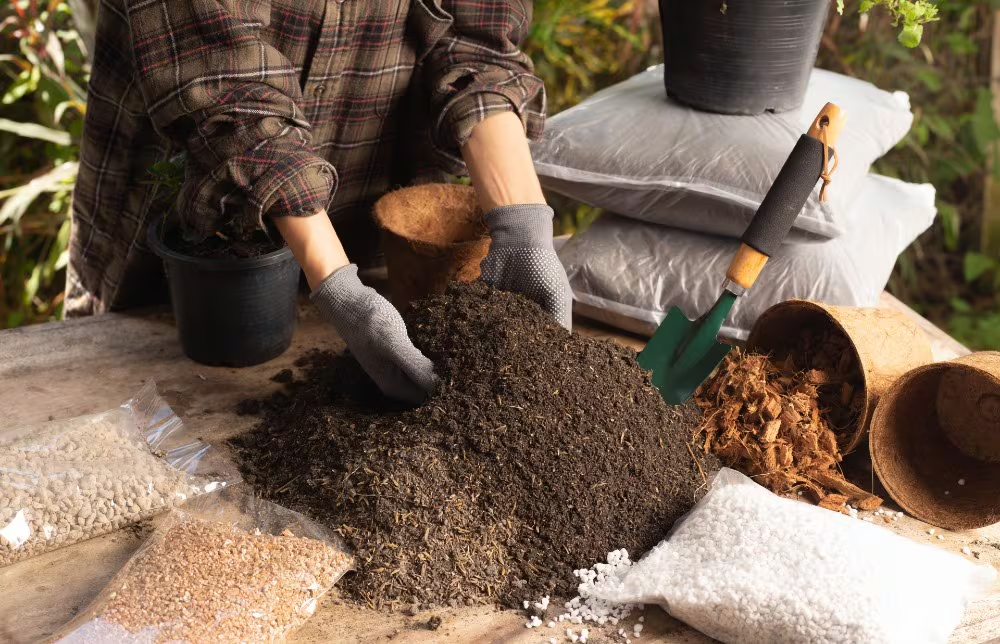
Gardening is often viewed as the art of growing plants, but experienced growers know it is actually the science of cultivating soil. The dirt beneath your feet is a complex living ecosystem that dictates the health and vitality of everything you plant. Understanding the basics of soil science transforms gardening from a guessing game into a predictable and rewarding pursuit. By learning about soil texture, structure, and composition, you can create the ideal environment for your garden to thrive.
This guide covers the fundamental aspects of soil science that every gardener needs to understand to unlock their garden’s full potential.
Understanding Soil Composition
Soil is not just dirt; it is a dynamic mixture of minerals, organic matter, water, and air. The balance of these four components determines how well your plants will grow.
The Mineral Component
The mineral portion makes up about 45% of soil volume. It consists of broken-down rocks and provides the physical structure for plant roots to anchor. These minerals also supply essential nutrients like calcium, potassium, and magnesium.
Organic Matter
Although it usually makes up only 5% of soil, organic matter is crucial. It consists of decomposing plant and animal residues, living microorganisms, and humus. This component acts like a sponge, holding moisture and nutrients while providing food for beneficial soil bacteria.
Air and Water
The remaining 50% of soil volume is pore space, occupied by air and water. Roots need oxygen to breathe, and water is essential for transporting nutrients. Ideally, your soil should have an equal balance of air and water in these pore spaces.
Identifying Your Soil Texture
Soil texture refers to the relative proportions of sand, silt, and clay particles. Knowing your texture helps you understand how your garden holds water and nutrients.
Sand
Sandy soils feel gritty. They have large particles with large gaps between them. This allows water to drain very quickly, often too quickly for plants to absorb it. While easy to dig, sandy soil struggles to retain nutrients.
Clay
Clay soils feel sticky when wet and hard when dry. The particles are microscopic and pack tightly together. This density allows clay to hold water and nutrients well, but it drains poorly and can easily become waterlogged, suffocating plant roots.
Silt
Silty soils feel smooth like flour. The particle size falls between sand and clay. It holds moisture better than sand but drains better than clay. However, it can be prone to compaction.
Loam: The Ideal Mix
Loam is the gardener’s gold standard. It is a balanced mixture of sand, silt, and clay. Loam drains well but stays moist, holds nutrients effectively, and is easy to work with.
The Importance of Soil pH
Soil pH measures acidity or alkalinity on a scale from 0 to 14, with 7 being neutral. Most garden vegetables and flowers prefer a slightly acidic pH between 6.0 and 7.0.
When the pH is too high or too low, nutrients become chemically locked in the soil and unavailable to plant roots. For example, in highly alkaline soils, iron becomes insoluble, leading to yellowing leaves. Testing your pH is a simple step that saves time and money on fertilizers that might otherwise be ineffective.
Improving Your Soil Health
Regardless of your native soil type, you can improve it over time. The key is adding organic matter consistently.
Adding Compost
Compost is the universal soil improver. It helps sandy soil hold moisture and breaks up heavy clay soil to improve drainage. Regularly mixing compost into your garden beds replenishes nutrients and boosts microbial activity.
Using Mulch
Covering the soil surface with organic mulch, such as wood chips, straw, or leaves, protects the soil structure. Mulch regulates temperature, retains moisture, and slowly breaks down to add organic matter over time.
Sourcing Quality Material
Sometimes, the existing ground is too poor or contaminated to work with immediately. In these cases, bringing in fresh material is necessary. For instance, if you are building raised beds, importing high-quality bulk material is often the best strategy. Residents in arid climates often look for premium topsoil in Salt Lake City to ensure their vegetable gardens have a nutrient-rich foundation right from the start. Starting with a quality base allows you to bypass years of amending poor native ground.
Protecting Soil Structure
Good soil structure means the particles clump together into aggregates, leaving plenty of pore space.
Avoid Compaction
Walking on wet garden beds compresses the pore spaces, expelling air and leading to compaction. Establish permanent paths so you never have to step directly on the growing soil.
Minimize Tilling
While tilling can aerate soil temporarily, excessive tilling destroys soil structure and disrupts the network of beneficial fungi. Adopting a “no-dig” or low-till approach preserves the natural architecture of the soil ecosystem.
Understanding the science beneath the surface empowers you to make better decisions for your garden. By focusing on soil health, you are not just growing plants; you are cultivating a vibrant ecosystem that will support your garden for years to come. Start testing and amending your soil today to see the difference it makes in your next harvest.


Do Watch Colors Match Seasons?

Choosing the Right Cavitation Machine: What Every Clinic Owner Should Know Before Buying

How to Spot a More Trustworthy Phone Tarot Service
Beware, the cult that victimized teenagers has brought its performances to Japan

How Does the FRM Exam Help Build a Career in Risk Analytics?

What Happens When You Stop Taking Ozempic For Weight Loss?

Generative Furniture Modeling Review 2026: Automating Prototyping Workflows
Why Healthcare Press Releases Need Regulatory Awareness
How to Turn Your Bahrain Registration Into a Competitive Advantage

Company License in Saudi Arabia: Matching Activity for UK Firms
Do Watch Colors Match Seasons?
Choosing the Right Cavitation Machine: What Every Clinic Owner Should Know Before Buying
How to Spot a More Trustworthy Phone Tarot Service
Beware, the cult that victimized teenagers has brought its performances to Japan
How Does the FRM Exam Help Build a Career in Risk Analytics?
What Happens When You Stop Taking Ozempic For Weight Loss?
Generative Furniture Modeling Review 2026: Automating Prototyping Workflows
Why Healthcare Press Releases Need Regulatory Awareness
How to Turn Your Bahrain Registration Into a Competitive Advantage
Company License in Saudi Arabia: Matching Activity for UK Firms

The Private World of Marina Pearl LeBlanc, Matt LeBlanc’s Only Child

What is Shoujo Ramune? The Comprehensive Guide

Who is Christina Erika Carandini Lee? Everything About Christopher Lee’s Daughter

Who is Amra Nor Jenkins? The Untold Story About Jeezy’s Daughter

The Untold Truth of William Mapel: A Deep Dive into His Personal Life

The Untold Story of Denika Kisty: Her Family, Net Worth, and More

The Rise of Ryan Nikolaos Sampras: From Humble Beginnings to Stardom

Who is Nicoletta Ruhl? Age, Family, Bio

William Givens Jensen Today: What We Know About Robin Givens’ Son

Who Is Stephanie Sarkisian? All You Need To Know AboutSteve Sarkisian’s Ex-Wife
-
 Celebrity1 year ago
The Private World of Marina Pearl LeBlanc, Matt LeBlanc’s Only Child
-
 Entertainment2 years ago
What is Shoujo Ramune? The Comprehensive Guide
-
 Celebrity2 years ago
Who is Christina Erika Carandini Lee? Everything About Christopher Lee’s Daughter
-
 Life Style2 years ago
Who is Amra Nor Jenkins? The Untold Story About Jeezy’s Daughter
-
 Celebrity2 years ago
The Untold Truth of William Mapel: A Deep Dive into His Personal Life
-
 Celebrity2 years ago
The Untold Story of Denika Kisty: Her Family, Net Worth, and More
-
 Celebrity2 years ago
The Rise of Ryan Nikolaos Sampras: From Humble Beginnings to Stardom
-
 Life Style2 years ago
Who is Nicoletta Ruhl? Age, Family, Bio