Tech
DTU and Modbus: Solving Pain Points in IoT Management and Control, Building a Solid Foundation for the Internet of Everything

- What are DTU and Modbus?
DTU (Data Transfer Unit)
A DTU is a core data communication middleware in industrial IoT scenarios. Essentially, it’s an industrial-grade terminal device that bidirectionally converts serial port data to IP data via a wireless network. Its core responsibility is to enable wireless/wired data interaction between terminal devices and servers, eliminating the need for users to develop complex communication logic. It’s a key component for simplifying IoT deployment.
The DTU hardware mainly consists of a CPU control module, a wireless communication module, and a power supply module. The software integrates a TCP/IP protocol stack, supporting transparent serial transmission, a permanent online heartbeat mechanism, and remote parameter configuration. It is adaptable to various communication scenarios and is primarily divided into three categories:
1. Wi-Fi DTU: Relying on local area network (LAN) Wi-Fi signals for short-range, high-speed data transmission, suitable for scenarios with good Wi-Fi coverage, such as parks and factories. It offers flexible deployment and lower costs.
2. 4G DTU: Utilizing cellular network communication, it offers wide coverage, is not limited by geographical environment, supports data transmission in mobile scenarios, and can operate stably in remote areas and outdoor equipment. Some high-end models already support 5G RedCap technology, significantly reducing costs.
3. Ethernet DTU: Achieves data transmission via wired Ethernet, offering high stability and low latency. Suitable for fixed scenarios with extremely high communication reliability requirements, such as industrial automation and data center equipment. Its core advantage lies in “simplified interaction.” Regardless of whether the end device and server use TCP, UDP, HTTP, or MQTT communication methods, DTU can achieve seamless adaptation. This allows equipment manufacturers to focus on their own end device development and server logic optimization without investing in communication technology research, thus completing IoT deployment. This is the core reason for the widespread adoption of DTU among small and medium-sized IoT enterprises. Simultaneously, DTU boasts advantages such as rapid and flexible networking, strong security and confidentiality, and low cost per traffic. It can operate stably in industrial environments ranging from -25°C to +65°C and supports automatic redialing after disconnection and multiple hardware and software watchdog functions to ensure the continuity and reliability of data transmission.
Modbus Protocol
Modbus is a universally recognized application layer communication protocol in the industrial automation field. Originating in 1979, it has become the “de facto standard” for connecting devices on different buses/networks (serial links, TCP/IP), supporting the interconnection of tens of millions of automated devices. Its core positioning is to provide standardized communication capabilities for client/server (master/slave) devices, solving the “communication barrier” problem between different manufacturers and types of equipment.
Modbus employs a request/response mechanism, independent of the underlying communication layer. It can adapt to serial links (RS232/485) and TCP/IP networks through layered mapping. Its core consists of PDUs (Protocol Data Units) and ADUs (Application Data Units). PDUs define application layer logic, while ADUs handle underlying data transmission adaptation, supporting CRC/LRC error checking to ensure data transmission accuracy. Its core value lies in “unified control,” providing standardized commands for device control. Servers can directly monitor and control various terminal devices via Modbus commands, eliminating the need to develop dedicated control logic for different devices. This significantly reduces the development and maintenance costs of the control system and mitigates the risk of system failure due to local processor malfunctions on end devices. It is the core carrier of the “centralized control” concept in the Internet of Things (IoT). Furthermore, Modbus uses reserved port 502 in a TCP/IP environment and supports encryption algorithms such as AES, ensuring communication security.
II. Core Features of DTU and Modbus
DTU Core Features
1. Multi-communication mode adaptation: Compatible with multiple communication methods such as Wi-Fi, 4G, and Ethernet, allowing flexible selection based on the scenario. It also supports encryption algorithms such as RSA and RC4 to ensure data transmission security.
2. Seamless multi-protocol integration: Perfectly adapts to mainstream server communication protocols such as TCP, UDP, HTTP, and MQTT, requiring no additional adapter development. Supports dual data center backup and simultaneous data reception from multiple data centers.
3. Simplified deployment costs: As a mature communication middleware, it eliminates the need for users to develop their own communication modules, reducing the technical threshold and manpower costs of IoT deployment. It also supports multiple wake-up methods such as SMS, voice, and data, adapting to different scenario requirements.
4. Strong scenario compatibility: Industrial-grade design adaptable to complex industrial environments and outdoor scenarios. Supports remote configuration and remote control, and is compatible with various serial port devices (RS232, RS485, etc.), achieving transparent conversion between serial port data and IP data.
5. Outstanding stability: Supports intelligent anti-disconnection, online detection, and automatic redialing upon disconnection. It features a permanent online heartbeat mechanism, multiple hardware and software watchdogs to ensure stable device operation, and the error rate can be controlled to an extremely low level.
Modbus Core Features
1. High Versatility: The “universal language” of industrial automation, Modbus is supported by almost all industrial sensors, controllers, PLCs, and other devices, eliminating compatibility concerns.
2. Simplified Control Logic:Provides standardized control commands, transferring control logic from end devices to the server, relieving end devices of local processing pressure, reducing the risk of end device failures, and supporting broadcast commands and exception responses for easy system debugging and maintenance.
3. Lightweight and Easy to Deploy: Simple protocol structure, low bandwidth consumption, no need for complex hardware support, and rapid integration into various devices. It adapts to different underlying networks and operates stably in both serial link and TCP/IP environments.
4. High Scalability: Supports parallel control of multiple devices. A single server can manage tens of thousands of terminal devices simultaneously via Modbus commands, easily enabling large-scale IoT system deployments. Function codes can be expanded as needed to adapt to complex control scenarios.
5. Controllable Cost:Standardized protocols eliminate the need for additional licensing fees, reducing the development and maintenance costs of control systems, simplifying device selection processes, and reducing compatibility debugging costs.
III. Application Scenarios of DTU and Modbus
DTU and Modbus complement each other, and their combination forms a core solution for centralized control of the Internet of Things (IoT). They are widely used in various fields such as industry, public services, and energy. The following are typical scenario analyses:
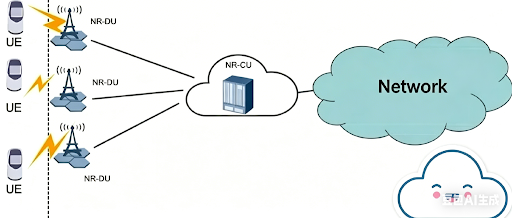
1. Remote Management and Control of 5G Base Stations: Operators use DTUs to transmit Modbus commands, enabling remote switching and power monitoring of 5G base stations. For example, at night when network load is low, the server issues a Modbus shutdown command, which is transmitted to the base station via the DTU, achieving energy saving and consumption reduction. Simultaneously, the server can use the DTU to issue Modbus query commands to obtain real-time power consumption and operating status data of the base station, enabling remote monitoring without on-site personnel, significantly improving management efficiency. This is a typical public services + energy scenario application of the DTU and Modbus combination.
2. Smart Streetlight Control System: Traditional streetlights require a processor on the terminal device to monitor light sensor data in real time and control the switching, which is costly and has a high risk of failure. 1. **Modbus Protocol-based light sensors and street light switches:** These sensors and switches can communicate with a server via a DTU (Distributed Unit). The server sends Modbus query commands to obtain illumination data, analyzes it, and then issues switch control commands, enabling centralized management of thousands of street lights. This eliminates the need for local processors on the end devices, reducing failure risks and deployment costs. It also supports remote debugging and status monitoring, making it suitable for smart city lighting scenarios.
2. Industrial Automation Scenarios: Sensors, controllers, and other devices in factories achieve standardized data exchange via the Modbus protocol. The data is then transmitted to an industrial server via a DTU. The server can remotely query equipment operating parameters and issue control commands, enabling remote monitoring and scheduling of the production line. This addresses the pain point of “manual on-site management” in traditional industrial scenarios. It is also adaptable to industrial environments, resistant to electromagnetic interference, and ensures stable data transmission. It is widely used in power grid monitoring, remote control of oil and gas wells, and other scenarios.
3. Other Extended Scenarios: In addition to the scenarios mentioned above, the combination of DTU and Modbus is also applied in smart agriculture (greenhouse sensor data acquisition, remote control of irrigation equipment), hydrological monitoring, and electricity meter reading. The core of these applications relies on DTU’s “data transmission capabilities” and Modbus’s “standardized control capabilities” to achieve centralized and remote equipment management, driving the Internet of Things (IoT) from “concept” to “practical application,” aligning with the industry trend of continuously growing industrial IoT connections.
IV. DTU Solves Transmission Challenges, Modbus Unifies Management Standards
With the booming development of IoT, “centralized management, lightweight deployment, and low-cost implementation” have become core industry demands. DTU and Modbus exist precisely to meet these needs, respectively solving the two core pain points of “data transmission” and “equipment control” in IoT deployment. Their essential value lies in “lowering the threshold for IoT deployment and promoting the upgrade of equipment management models.”
DTU: Solving the “Data Transmission” Challenge, Empowering SMEs’ IoT Transformation
The core of IoT is “the interconnection of everything,” and the prerequisite for interconnection is “data transmission.” Currently, companies like Alibaba Cloud, Baidu, Tencent, and China Mobile have launched IoT platforms, solving the challenges of data processing, storage, and analysis on the server side, forming an industry pattern of “large enterprises building their own platforms, and SMEs relying on public platforms.” However, for most small and medium-sized equipment manufacturers, the high technical barriers and costs of independently developing communication modules and adapting to different communication protocols have become the biggest obstacle to their IoT transformation.
The emergence of DTU (Distributed Terminal Unit) precisely addresses this pain point: as a mature communication middleware, DTU eliminates the need for users to develop their own communication logic. It can seamlessly connect to various end devices and servers, adapting to different communication methods and protocols. This allows SMEs to focus on their core business (end device development and server logic optimization) without investing significant resources in researching communication technologies, enabling them to quickly deploy IoT. Industry data shows that the number of industrial IoT connections has exceeded 12 billion. As the core carrier of remote device communication, the market size of DTU is estimated at $2.6 billion. Its value lies not only in “transmitting data” but also in “lowering the barrier to entry for IoT,” allowing more SMEs to participate in the IoT wave and promoting the large-scale popularization of IoT. Meanwhile, the technological evolution of DTUs (such as 5G RedCap integration and edge intelligence integration) further enhances their application value, reducing cloud load, lowering deployment costs, and adapting to more complex scenarios.
Modbus: Unifying Device Control Standards and Driving Upgrades in Management Modes
The ultimate goal of the Internet of Things (IoT) is “centralized management,” and the prerequisite for centralized management is “unified device control.” In traditional device management modes, the control logic of each device is implemented locally, requiring an independent processor. This not only increases equipment costs and failure risks but also prevents interoperability between devices from different manufacturers and of different types, creating “information silos” that hinder centralized management.
The core value of the Modbus protocol is to break down these “information silos,” providing standardized device control commands that allow devices from different manufacturers and of different types to interact and be controlled through unified instructions. By leveraging the Modbus protocol, the control logic of end devices can be entirely transferred to the server, relieving the end devices of their “local processing pressure” and reducing equipment failure risks and development costs. Simultaneously, the server can centrally manage multiple devices via Modbus commands, significantly improving management efficiency and driving the upgrade of device management from “local decentralized management” to “remote centralized management.” This model not only simplifies the deployment and maintenance of the control system but also reduces the risk of system failure. It is the core embodiment of the “centralized control” concept in the Internet of Things (IoT) and a key support for achieving large-scale management in the industrial automation field.
V. Solution Optimization: Network I/O Empowers DTU+Modbus, Lowering the Deployment Threshold for Low-Cost Scenarios
In the basic DTU+Modbus solution, devices supporting the Modbus protocol are often expensive, making deployment difficult for cost-sensitive scenarios (such as small and medium-sized parks and low-cost IoT projects). Network I/O, as a “trade-off end gateway,” precisely fills this gap, becoming an important supplement to the DTU+Modbus solution.
Network I/O is essentially an “enhanced DTU,” possessing both the data transmission capabilities of a DTU (enabling wireless/wired data interaction between end devices and servers) and the ability to directly function as a control device, acquiring digital and analog signals and controlling the on/off states of switches. Its core value lies in “cost savings”: it eliminates the need for high-end modules supporting the Modbus protocol on each device; basic data acquisition and control functions can be achieved through network I/O. Simultaneously, it is compatible with Modbus commands, seamlessly integrating into a centralized management and control system of DTU+Modbus, significantly reducing the deployment cost of the entire IoT system, simplifying the system structure, and enabling the DTU+Modbus solution to adapt to more low-cost, lightweight IoT scenarios, further expanding its application scope.
VI. Core Synergy and Empowerment, Optimal Product Deployment
DTU and Modbus complement each other, respectively addressing the core pain points of “data transmission” and “unified device control” in the IoT. Combined with network I/O optimization, they form a low-cost, easily deployable centralized management and control solution, assisting enterprises in their digital transformation. To address this core need, our company EBYTE, with years of experience in the IoT field, has specifically developed products adapted to this solution. The following two core products perfectly meet this requirement:
E840-DTU: Industrial-grade 4G cloud data transmission DTU, supporting RS485/RS232 interfaces, 4G full network compatibility with no distance limitations, suitable for outdoor and remote scenarios, seamlessly compatible with Modbus and TCP/UDP/MQTT protocols, industrial-grade protection, DIN rail mounting, stable bidirectional transparent transmission between serial port and server, suitable for the data transmission needs of SMEs undergoing IoT transformation.
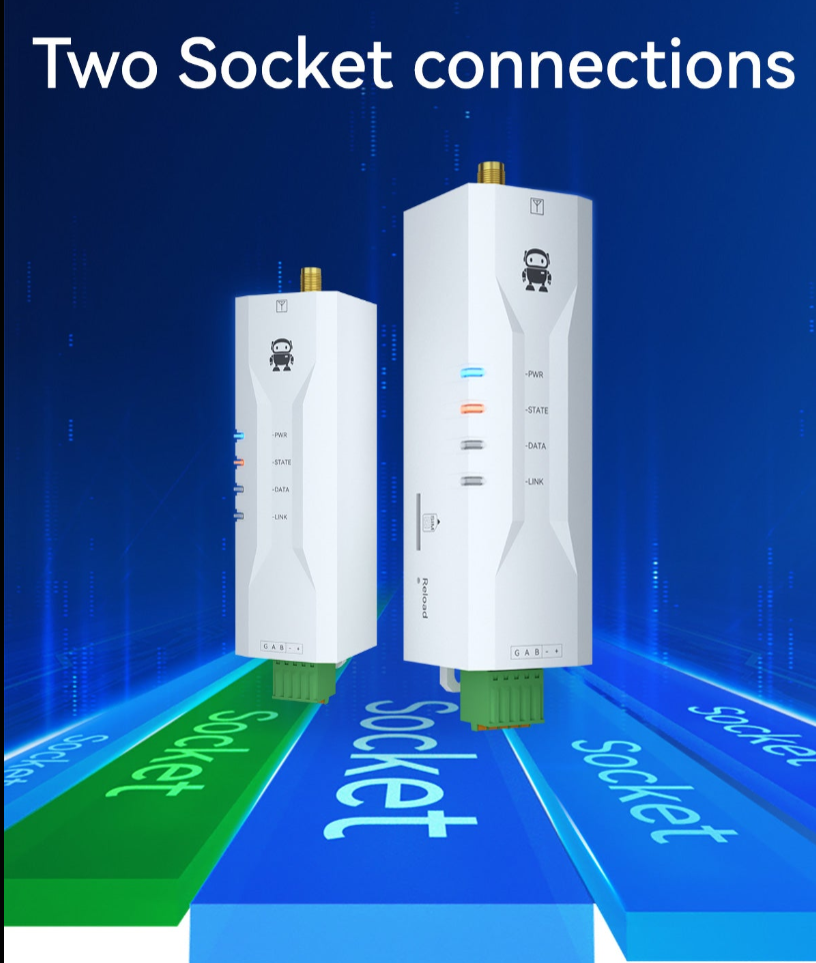
M31 series: Distributed IO host series, as a core network IO product, supporting dual Modbus protocols, combining data transmission and control functions, dual communication interfaces for multi-client access, modular and scalable, industrial-grade rugged design, suitable for low-cost scenarios, requiring no high-end Modbus modules, seamlessly integrated into the DTU+Modbus management system.


Healing the Whole Person: The Ultimate Guide to Dual Diagnosis Treatment at LIV Recovery Center

Do Watch Colors Match Seasons?

Choosing the Right Cavitation Machine: What Every Clinic Owner Should Know Before Buying

How to Spot a More Trustworthy Phone Tarot Service
Beware, the cult that victimized teenagers has brought its performances to Japan

How Does the FRM Exam Help Build a Career in Risk Analytics?

What Happens When You Stop Taking Ozempic For Weight Loss?

Generative Furniture Modeling Review 2026: Automating Prototyping Workflows
Why Healthcare Press Releases Need Regulatory Awareness
How to Turn Your Bahrain Registration Into a Competitive Advantage
Healing the Whole Person: The Ultimate Guide to Dual Diagnosis Treatment at LIV Recovery Center
Do Watch Colors Match Seasons?
Choosing the Right Cavitation Machine: What Every Clinic Owner Should Know Before Buying
How to Spot a More Trustworthy Phone Tarot Service
Beware, the cult that victimized teenagers has brought its performances to Japan
How Does the FRM Exam Help Build a Career in Risk Analytics?
What Happens When You Stop Taking Ozempic For Weight Loss?
Generative Furniture Modeling Review 2026: Automating Prototyping Workflows
Why Healthcare Press Releases Need Regulatory Awareness
How to Turn Your Bahrain Registration Into a Competitive Advantage

The Private World of Marina Pearl LeBlanc, Matt LeBlanc’s Only Child

What is Shoujo Ramune? The Comprehensive Guide

Who is Christina Erika Carandini Lee? Everything About Christopher Lee’s Daughter

Who is Amra Nor Jenkins? The Untold Story About Jeezy’s Daughter

The Untold Truth of William Mapel: A Deep Dive into His Personal Life

The Untold Story of Denika Kisty: Her Family, Net Worth, and More

Who is Nicoletta Ruhl? Age, Family, Bio

The Rise of Ryan Nikolaos Sampras: From Humble Beginnings to Stardom

William Givens Jensen Today: What We Know About Robin Givens’ Son

Who Is Stephanie Sarkisian? All You Need To Know AboutSteve Sarkisian’s Ex-Wife
-
 Celebrity1 year ago
The Private World of Marina Pearl LeBlanc, Matt LeBlanc’s Only Child
-
 Entertainment2 years ago
What is Shoujo Ramune? The Comprehensive Guide
-
 Celebrity2 years ago
Who is Christina Erika Carandini Lee? Everything About Christopher Lee’s Daughter
-
 Life Style2 years ago
Who is Amra Nor Jenkins? The Untold Story About Jeezy’s Daughter
-
 Celebrity2 years ago
The Untold Truth of William Mapel: A Deep Dive into His Personal Life
-
 Celebrity2 years ago
The Untold Story of Denika Kisty: Her Family, Net Worth, and More
-
 Life Style2 years ago
Who is Nicoletta Ruhl? Age, Family, Bio
-
 Celebrity2 years ago
The Rise of Ryan Nikolaos Sampras: From Humble Beginnings to Stardom