Life Style
The Machines That Carry Us: What Model Airplanes, Aircraft, and Boats Reveal About the People Who Keep Them


There are two categories of machine that human beings have always treated differently from every other object they build. The vehicle that moves through air, and the vessel that moves through water. Both require the operator to commit entirely to an environment that the human body was not designed to inhabit. Both demand a relationship with the physical world — with weather, with navigation, with the management of energy and buoyancy and lift — that ground-based transport has never quite replicated. And both, across every culture that has produced them, have generated a collecting and miniaturising tradition that the automobile, the train, and every other category of vehicle has never matched for depth or longevity.
The question of why is worth asking carefully. Not why people collect scale models in general — that is reasonably well understood — but why the aircraft and the vessel specifically generate the most sustained, the most culturally widespread, and the most personally significant collecting traditions in the miniature world. The answer reveals something genuine about the relationship between human beings and the two environments they have spent the longest time trying to conquer — and still, in important ways, have not.
Why Air and Sea Produce the Most Collected Machines in History
Flight and seafaring share a quality that land transport does not: both require a complete surrender to an environment that actively resists human presence. The car driver who makes an error can, within limits, stop. The pilot who makes an error in the same environment cannot pause to reconsider. The sailor whose vessel encounters conditions beyond its capabilities has no roadside assistance and no adjacent lane to move into. Both environments demand a quality of attention, preparation, and skill that the land environment simply does not require in the same terms — and both produce, in the people who master them, a relationship with their vehicles that the car driver’s relationship with their car cannot quite replicate.
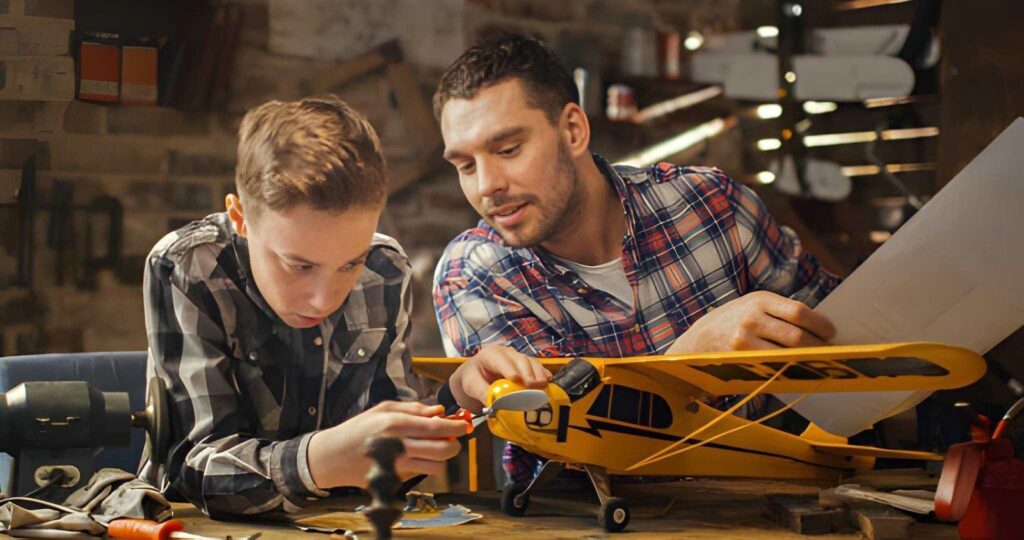
This is why model airplanes and boat models occupy their own cultural category. They are not simply replicas of vehicles. They are replicas of the relationship between the operator and an environment that tolerated their presence conditionally — that required specific skills, specific knowledge, and specific respect to navigate safely. The miniature that reproduces that relationship in three dimensions carries a weight that a model car, for all its beauty or historical significance, does not quite match. It is not the machine that is being preserved. It is the encounter.
What Model Airplanes Carry That Photographs Cannot
The aviation collector’s relationship with their subject is almost always biographical before it is historical. The Spitfire on the shelf is there because the collector’s grandfather flew one, or because a specific airshow encounter at a specific age produced an admiration that has never quite dissipated, or because thirty years of professional flying produced a relationship with aircraft as operational tools rather than aesthetic objects — and the miniature is the closest available physical equivalent to that relationship, maintained at a scale that fits in the room.
The aircraft models that carry the most personal weight are almost never the most historically famous subjects. They are the training type in which a pilot went solo, the commercial type they flew for two decades, the aircraft they were denied the opportunity to fly and have maintained a relationship with through study and scale ever since. The biography of the collector is embedded in the subject choice before the quality of the replica is even considered. Get the subject wrong and the quality is irrelevant. Get it right and even a modest replica carries something that no photograph in any album quite replicates.
What the Boat Model Carries That the Land Vehicle Never Can
Maritime collecting has a depth that aviation collecting, for all its cultural penetration, does not quite match. The seafaring tradition is older than recorded history. The relationship between human beings and vessels — the accumulated craft knowledge of hull design, rigging, navigation, and seamanship that has been passed between generations for thousands of years — exists in a cultural dimension that aviation, with its century of documented history, is still building toward. The ship model in an English admiral’s house in 1760 was performing the same cultural function as the ship model in a maritime executive’s office in 2026: it was displaying a professional identity built on the sea, preserved in miniature in a land-based environment that would otherwise show no evidence of it.
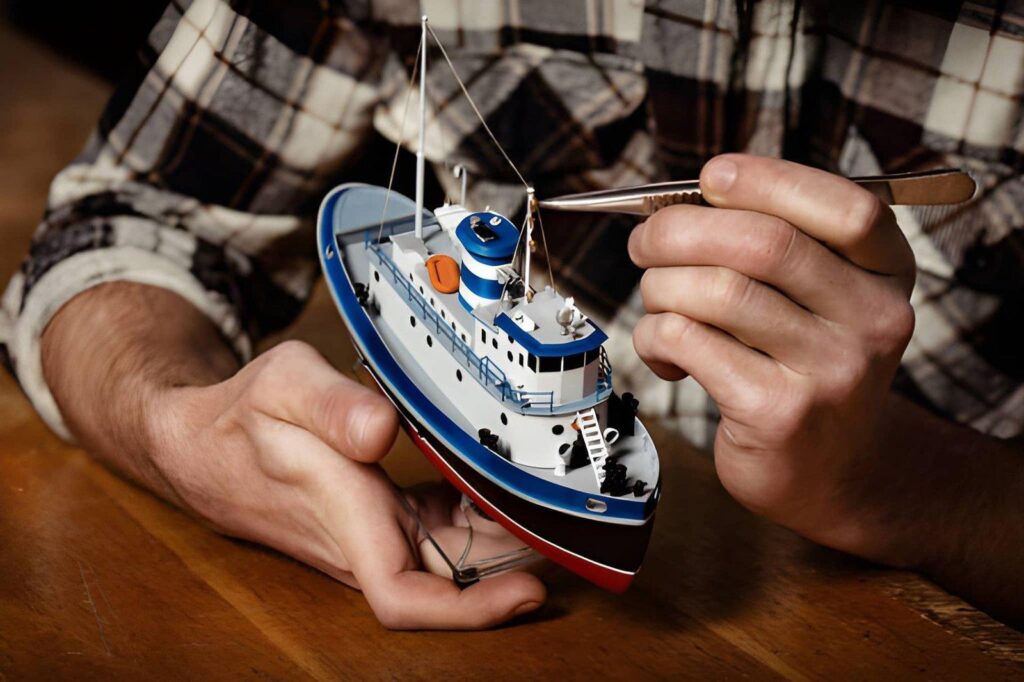
The boat model on the shelf of someone who has spent their career at sea is not decorative in any sense that the word usually implies. It is biographical, professional, and cultural simultaneously — a record of the specific vessels that carried the collector through the specific waters of a specific career, preserved with the same seriousness that the pilot’s aircraft replica preserves a flying career. Both objects ask the same question of any visitor who notices them: do you know what this is, and do you understand what it represents? The answer to that question is the beginning of the conversation that serious collectors are always hoping to have.
The aircraft and the vessel are the two machines that human beings have never fully domesticated. The miniature that preserves them is not a trophy. It is an acknowledgement — that the encounter with those environments was real, demanding, and worth keeping permanently within reach.
The Shared Logic — Why Both Traditions Produce the Most Serious Collectors
The aviation and maritime collecting traditions share a quality that distinguishes them from automotive collecting and from most other miniature traditions: the collectors are almost always people who have direct operational experience with the subject. The ship model collector who served at sea. The model airplane collector who holds a licence. The maritime historian whose relationship with vessels is professional rather than enthusiastic. This operational experience produces a collecting standard — for accuracy, for subject specificity, for the quality of what the miniature communicates about the original — that the enthusiast-only collector rarely applies with the same rigour.
The result is a collecting tradition in which the gap between an adequate replica and a genuinely good one is more visible, and more consequential, than in almost any other category. The pilot who looks at a model airplane and cannot immediately identify the specific variant being represented has been presented with an inadequate object. The mariner who looks at a boat model whose hull lines do not reflect the actual vessel’s designed waterline is looking at something that misrepresents the subject it claims to preserve. Both know it immediately. Both remember it. And neither forgives it as easily as the general enthusiast might.
Frequently Asked Questions
Why do aviation and maritime subjects produce the most passionate scale model collectors?
Both environments — air and sea — demand a quality of relationship with the vehicle that land-based transport does not require in the same terms. The pilot and the mariner develop an operational intimacy with their vehicles that produces a collecting standard, a subject specificity, and a personal investment in the replica’s accuracy that the automotive enthusiast rarely matches. The miniature is preserving an encounter with an environment that required genuine skill and respect — and that weight is carried by the object in a way that a purely aesthetic collecting motivation does not produce.
What is the difference between a model airplane and an aircraft model?
In practice the terms are used interchangeably in the collecting market. Model airplane tends to refer to kit-built or display replicas of civil and general aviation subjects, while aircraft model is more commonly used for precision display replicas across all categories including military and commercial aviation. The distinction matters less than the accuracy of the specific subject — the variant represented, the period-correct markings, and the quality of the construction relative to the standard that the subject’s significance deserves.
What type of boat model carries the most cultural and personal significance?
The boat model that carries the most personal significance is always the one that references a specific vessel the collector has an operational or biographical relationship with — the commercial vessel they worked aboard, the yacht they raced, the naval vessel they served on. For historical and cultural significance, tall ship subjects — full-rigged ships, famous vessels from the age of sail, significant naval vessels — carry the deepest collecting tradition and produce the most detailed and demanding accuracy standards. Both categories are well served by commissioned hand-crafted replicas that can reproduce the specific hull form, rigging configuration, and markings of a named vessel with accuracy that production catalogue pieces cannot approach.
The Environments That Refused to Be Ordinary
The air and the sea have been resisting human domestication since the first vessel was launched and the first wing generated lift. They have tolerated our presence on certain terms — terms that include specific skills, specific equipment, and a specific quality of respect that the land environment has never demanded with the same force. The machines that enabled that presence — the aircraft, the vessel — carry that history in their form. The miniatures that preserve those machines carry it in miniature. And the collector who keeps them within reach is acknowledging, every time they see them, that the encounter with those environments was the most demanding and the most significant thing their machines were ever asked to do.
That acknowledgement is worth preserving carefully. The object that holds it deserves the accuracy the encounter earned.


The Machines That Carry Us: What Model Airplanes, Aircraft, and Boats Reveal About the People Who Keep Them

The Machines That Carry Us: What Model Airplanes, Aircraft, and Boats Reveal About the People Who Keep Them

Where to Buy Amethyst Online: Trusted Sources & Buyer’s Guide’

5 Audience Targeting Strategies That Actually Work

Must-See Places to Visit Near Madrid for First-Time Travelers

Sustaplex 275 and GP Methan 10 Cycle Guide: Testosterone + Dianabol Stack Review

The Practical Home Upgrade Checklist Small Decisions That Make a Big Difference

Jodi Lynn Calaway Biography and Life Overview

Jan Ashley Biography: Everything You Need to Know About Her Life and Legacy

Erykah Badu Kids: A Comprehensive Look at Her Children and Family Life
The Machines That Carry Us: What Model Airplanes, Aircraft, and Boats Reveal About the People Who Keep Them
The Machines That Carry Us: What Model Airplanes, Aircraft, and Boats Reveal About the People Who Keep Them
Where to Buy Amethyst Online: Trusted Sources & Buyer’s Guide’
5 Audience Targeting Strategies That Actually Work
Must-See Places to Visit Near Madrid for First-Time Travelers
Sustaplex 275 and GP Methan 10 Cycle Guide: Testosterone + Dianabol Stack Review
The Practical Home Upgrade Checklist Small Decisions That Make a Big Difference
Jodi Lynn Calaway Biography and Life Overview
Jan Ashley Biography: Everything You Need to Know About Her Life and Legacy
Erykah Badu Kids: A Comprehensive Look at Her Children and Family Life

The Private World of Marina Pearl LeBlanc, Matt LeBlanc’s Only Child

What is Shoujo Ramune? The Comprehensive Guide

Who is Amra Nor Jenkins? The Untold Story About Jeezy’s Daughter

Who is Christina Erika Carandini Lee? Everything About Christopher Lee’s Daughter

The Untold Truth of William Mapel: A Deep Dive into His Personal Life

The Rise of Ryan Nikolaos Sampras: From Humble Beginnings to Stardom

The Untold Story of Denika Kisty: Her Family, Net Worth, and More

Who is Nicoletta Ruhl? Age, Family, Bio

Who Is Stephanie Sarkisian? All You Need To Know AboutSteve Sarkisian’s Ex-Wife

Gomovies Alternatives: Best Free Streaming Platforms
-
 Celebrity11 months ago
The Private World of Marina Pearl LeBlanc, Matt LeBlanc’s Only Child
-
 Entertainment1 year ago
What is Shoujo Ramune? The Comprehensive Guide
-
 Life Style1 year ago
Who is Amra Nor Jenkins? The Untold Story About Jeezy’s Daughter
-
 Celebrity1 year ago
Who is Christina Erika Carandini Lee? Everything About Christopher Lee’s Daughter
-
 Celebrity1 year ago
The Untold Truth of William Mapel: A Deep Dive into His Personal Life
-
 Celebrity1 year ago
The Rise of Ryan Nikolaos Sampras: From Humble Beginnings to Stardom
-
 Celebrity1 year ago
The Untold Story of Denika Kisty: Her Family, Net Worth, and More
-
 Life Style1 year ago
Who is Nicoletta Ruhl? Age, Family, Bio