Blog
Cricket Gear in Taiwan: What to Buy and What to Improvise

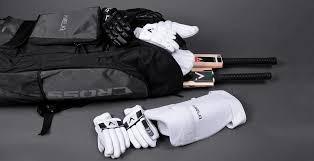
I’ve been living in Taipei for over a year now, and setting up a proper cricket kit here was honestly one of my favorite little adventures. Taiwan isn’t exactly Lord’s Cricket Ground, but with some smart shopping and creative thinking, you can get a fully playable setup without flying anything in from Mumbai or Melbourne.
The Essentials You Must Have
Let’s be clear about one thing first. Cricket without the right safety gear isn’t just uncomfortable; it can seriously hurt you. I learned this the hard way during a casual game in Da’an Park when a straight drive caught my shin at full speed. Not fun.
Here’s what you absolutely need before you play a single ball.
A helmet is non-negotiable if you’re facing any pace above gentle lobs. Even in casual games, a misfield can send a hard ball straight at your face. Don’t skip this.
Batting gloves protect your fingers from genuine injury. A cricket ball hitting an ungloved thumb at speed can fracture it cleanly. I’ve seen it happen twice in friendly matches.
Box and abdominal guard. Yes, even in a park game. No explanation needed.
Batting pads matter more than people think. The knee roll and shin protection aren’t just for show. On hard outfield surfaces or concrete edges, a ball that skids low will absolutely find your shin.
For a playable setup, you need stumps, a bat, a ball, and some kind of boundary marker. That’s the minimum. With those five things, you can run a real game.
A standard team needs two sets of stumps with bails, one bat per batter, and ideally a few balls because you will lose them. Fielding with bare hands is fine. A wicket keeper ideally wants gloves, but in casual play people just keep wicket without them all the time.
The absolute floor for a safe two-person practice session is a bat, one ball, one helmet, one pair of gloves, one pair of pads, and a box. Everything else is nice to have. Start there and build outward.
What to Buy Locally vs What to Order Online
Taiwan has surprisingly decent sports retail if you know where to look. Decathlon Taiwan is your first stop for almost everything entry-level. They stock basic cricket bats, tennis balls, and sometimes even soft training cricket balls. Prices are reasonable and the quality is honest. Nothing premium, but totally good enough to get started.
Eslite and large Jason’s sports sections occasionally carry basic gear, but stock is inconsistent. Don’t rely on them as your primary source.
For anything serious, PChome and Shopee Taiwan both have cricket gear listed from local resellers. I ordered a pair of pads through Shopee and had them in three days. Search in English and Chinese both, because listings vary. Try searching 板球 (cricket in Chinese) and you’ll find extra options that English searches miss.
For premium bats, gloves, or helmets from proper cricket brands, order from Amazon Japan or direct from Indian retailers like SS, SG, or Kookaburra. Shipping from Japan is fast, usually four to six days, and the customs situation is straightforward for sports equipment under a certain value.
If you want to kill time while waiting for your delivery, people in Taiwan spend their downtime in all kinds of ways. Some explore night markets, some binge dramas, and some check out platforms like 大撈家, an online casino option that a few expat friends of mine have mentioned as a way to pass evenings. Point is, your gear order from Japan might take five days, which is genuinely a comfortable wait if you’ve got something to do.
My honest opinion on buying locally versus ordering online: buy your ball, training cones, and any improvised stumps locally from sports shops or hardware stores. Order your bat, pads, helmet, and gloves online, where selection and sizing are better.
One thing I wish I knew earlier: Taiwanese batting gloves exist on Shopee in youth sizing mostly. If your hands are medium to large, order adult sizing from abroad. The local youth gloves looked fine in photos, but were genuinely too small for any adult hand I tried them on.
Smart Improvisations That Actually Work
This is where cricket in Taiwan gets genuinely creative. And honestly, some of these improvisations are things I’d use even if proper gear were sitting right next to me.
Stumps are the easiest thing to improvise. Go to any hardware store, B&Q, or a local 五金行, and buy three lengths of PVC pipe. Cut them to 71 centimeters, which isthe regulation stump height. For bails, use two short dowel pieces or even chopsticks laid across the top. They fall off on impact exactly like real bails. I’ve been using this setup for eight months, and it works perfectly on both grass and soft ground.
For balls, a standard tennis ball is a legitimate training tool. Red tape wrapped tightly around a tennis ball creates a crude seam that actually swings in the right conditions. A taped tennis ball is faster to bowl, doesn’t hurt on the shin, and works brilliantly for building batting timing. I genuinely prefer tape ball cricket for casual evening games.
Rubber training balls are sold at Decathlon and work well for beginners. If you want something closer to real match conditions, order a Cosco or Kookaburra practice ball online. They’re cheap and last well.
Nets are the hardest thing to improvise. If you need a net for serious batting practice, buy a cheap fishing net from a fishing supply shop. They sell large mesh netting by the meter. Hang it between two poles with bungee cords, and it catches most deliveries cleanly. It’s not perfect but it genuinely works.
For boundary and fielding position markers, traffic cones from hardware stores are great. Bright colored discs used for kids’ football training also work and are sold at Decathlon for almost nothing.
Stumps bag? A simple plastic tube from a hardware store or a rolled yoga mat bag fits your PVC stumps perfectly.
My favorite improvisation I’ve seen in Taiwan: a group of guys using plastic bottles filled with sand as stumps during a beach game in Hualien. Balls hit them, they toppled over, and everyone cheered. Cricket finds a way.
Choosing a Bat and Pads Without Trying Them On
Buying a bat without holding it first feels wrong. I get it. But it’s completely manageable if you know exactly what to measure and what to ignore.
Bat sizing is based on your height. If you’re between 163 and 175 centimeters, a Short Handle bat is your size. That’s the most common adult bat and what most online stores default to when they say “full size.” Above 183 centimeters, look for Long Handle options. Below 163 centimeters, consider a Harrow or Size 6.
Weight matters more than people expect. Most adult bats sold online are between 1100 and 1250 grams. Heavier bats hit the ball harder but tire your arms out faster. For casual or beginner play, stay at 1100 to 1180 grams. Don’t let anyone convince you that heavier automatically means better.
For pads, sizing is simpler. Measure from the center of your kneecap to the top of your boot. Most adult pads are designed for 40 to 45 centimeters in that measurement. If you’re ordering from abroad, check the brand’s size chart because SG and Kookaburra measure slightly differently.
Common mistakes I see people make when buying blind. First, ordering a junior bat because it’s cheaper, then finding it too short for a proper stance. Second, buying pads without checking if they come as a pair. Some listings show one pad. Read carefully. Third, ignoring the face profile of the bat. A thick edge and high spine mean more power. A flat bat is for technique-focused players. Most beginners want the thicker edge.
My personal recommendation: for a first bat in Taiwan without trying it on, buy a mid-range Kashmir willow bat in the 1150 to 1200 gram range from a reputable Indian brand on Amazon Japan. It won’t disappoint, it ships fast, and Kashmir willow is genuinely durable enough for park cricket on any surface.


Do Watch Colors Match Seasons?

Choosing the Right Cavitation Machine: What Every Clinic Owner Should Know Before Buying

How to Spot a More Trustworthy Phone Tarot Service
Beware, the cult that victimized teenagers has brought its performances to Japan

How Does the FRM Exam Help Build a Career in Risk Analytics?

What Happens When You Stop Taking Ozempic For Weight Loss?

Generative Furniture Modeling Review 2026: Automating Prototyping Workflows
Why Healthcare Press Releases Need Regulatory Awareness
How to Turn Your Bahrain Registration Into a Competitive Advantage

Company License in Saudi Arabia: Matching Activity for UK Firms
Do Watch Colors Match Seasons?
Choosing the Right Cavitation Machine: What Every Clinic Owner Should Know Before Buying
How to Spot a More Trustworthy Phone Tarot Service
Beware, the cult that victimized teenagers has brought its performances to Japan
How Does the FRM Exam Help Build a Career in Risk Analytics?
What Happens When You Stop Taking Ozempic For Weight Loss?
Generative Furniture Modeling Review 2026: Automating Prototyping Workflows
Why Healthcare Press Releases Need Regulatory Awareness
How to Turn Your Bahrain Registration Into a Competitive Advantage
Company License in Saudi Arabia: Matching Activity for UK Firms

The Private World of Marina Pearl LeBlanc, Matt LeBlanc’s Only Child

What is Shoujo Ramune? The Comprehensive Guide

Who is Christina Erika Carandini Lee? Everything About Christopher Lee’s Daughter

Who is Amra Nor Jenkins? The Untold Story About Jeezy’s Daughter

The Untold Truth of William Mapel: A Deep Dive into His Personal Life

The Untold Story of Denika Kisty: Her Family, Net Worth, and More

The Rise of Ryan Nikolaos Sampras: From Humble Beginnings to Stardom

Who is Nicoletta Ruhl? Age, Family, Bio

William Givens Jensen Today: What We Know About Robin Givens’ Son

Who Is Stephanie Sarkisian? All You Need To Know AboutSteve Sarkisian’s Ex-Wife
-
 Celebrity1 year ago
The Private World of Marina Pearl LeBlanc, Matt LeBlanc’s Only Child
-
 Entertainment2 years ago
What is Shoujo Ramune? The Comprehensive Guide
-
 Celebrity2 years ago
Who is Christina Erika Carandini Lee? Everything About Christopher Lee’s Daughter
-
 Life Style2 years ago
Who is Amra Nor Jenkins? The Untold Story About Jeezy’s Daughter
-
 Celebrity2 years ago
The Untold Truth of William Mapel: A Deep Dive into His Personal Life
-
 Celebrity2 years ago
The Untold Story of Denika Kisty: Her Family, Net Worth, and More
-
 Celebrity2 years ago
The Rise of Ryan Nikolaos Sampras: From Humble Beginnings to Stardom
-
 Life Style2 years ago
Who is Nicoletta Ruhl? Age, Family, Bio