Tech
The Invisible Rework: How Miscommunication Becomes Doubled Work

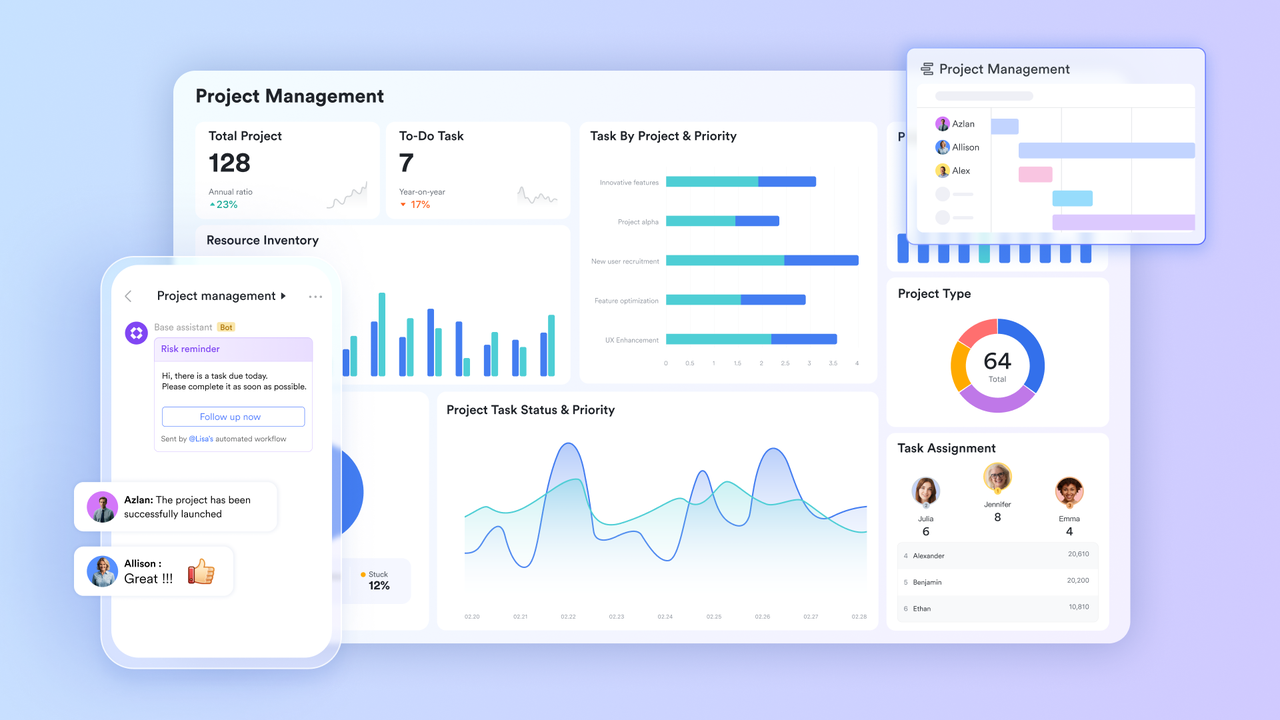
Rework is the most expensive category of work in most organizations because it carries two costs: the cost of doing the wrong thing and the cost of doing the right thing afterward. What makes it particularly costly is that it is almost never tracked. The engineer who rebuilds a feature because the requirement was ambiguous logs the rebuild time against the feature, not against the miscommunication that caused it. The designer who produces three rounds of concepts because the brief was unclear charges all three rounds to the project, not to the briefing failure.
The operations manager who runs two onboarding cycles for the same hire because the first one was based on an outdated process template charges both to operations, not to the documentation gap. Rework is invisible because it disguises itself as productive work, and it accumulates to a scale that would be alarming if it were ever calculated honestly. The organizations that have driven their rework rate to near zero have not hired more careful people or implemented more rigorous review processes. They have built a communication infrastructure where ambiguity is caught before work begins rather than discovered after it has been completed. That infrastructure is built on project management tools that give every team member a shared, current, unambiguous picture of what needs to be done before the first task is started.
A brief that cannot be misread with Lark Docs
The most common source of rework is a brief that was written by one person and interpreted by another. The writer knew what they meant. The reader interpreted it reasonably but differently. The work produced was reasonable but wrong. The rework that follows is not a failure of the person who did the work. It is a failure of the brief.
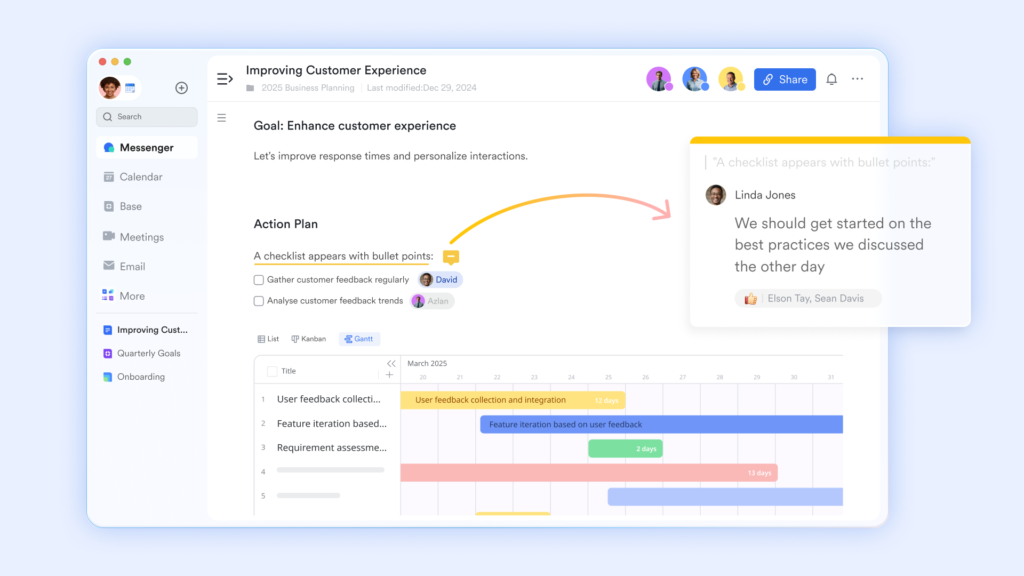
- Real-time co-editing for collaborative brief development. The brief is built simultaneously by the person who knows what the outcome should be and the person who will produce it. Ambiguities are identified and resolved before work begins rather than surfacing as a discrepancy between the brief and the output.
- “Comment” threads for specific clarification. Any team member who reads a section of the brief and finds it ambiguous leaves a comment on that exact section. The author sees the comment in context and responds with the specific clarification needed, so the resolution is attached to the requirement it addresses rather than living in a separate message that may not be read.
The result: The brief that reaches the person doing the work has already been reviewed by that person, and every ambiguity they identified has been resolved before the first task was started. The rework that results from brief misinterpretation drops to near zero.
One version of every requirement with Lark Messenger
Requirement changes that travel through informal channels are a primary source of invisible rework. The product manager tells the engineer in a chat message that the scope has changed. The engineer updates their approach. The designer, who was not in the chat, continues building against the original requirement. When the two outputs are assembled, they do not fit. The misalignment costs two rounds of rework rather than the one clear communication that would have prevented it.
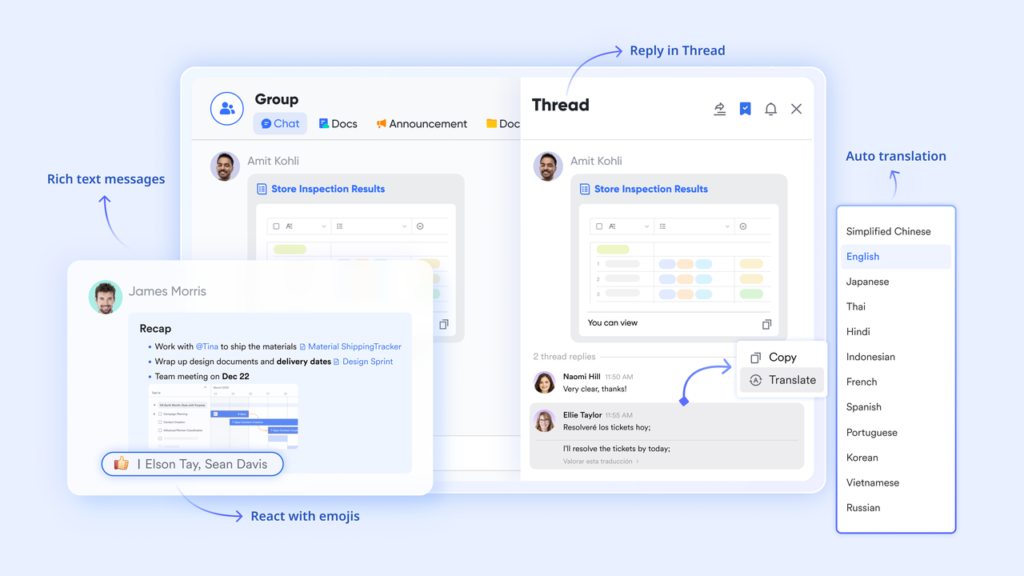
- “Chat Tabs & Threads” for requirement change management. When a requirement changes, the update is communicated in the named requirement thread within the project group rather than in a direct message between two people. Every team member with access to the thread sees the update simultaneously, regardless of whether they were part of the original conversation.
- “Read/Unread Status” for confirmed receipt of critical requirement updates. When a requirement change is communicated to a group, the person managing the project can see which team members have read the update and which have not, so they can confirm that the change has reached every person whose work is affected before the work progresses further in the wrong direction.
The result: Requirement changes reach every affected team member through the same channel at the same moment. The scenario where two people are working from different versions of the same requirement, without either knowing the other has a different version, is eliminated at the infrastructure level rather than by relying on individual communication discipline.
Shared project data that does not diverge with Lark Base
A significant category of rework originates in data divergence: two team members working from different versions of the same operational record, each assuming their version is current, and producing outputs that conflict because the underlying data they were working from did not match. This happens every time a shared spreadsheet is updated by one person without the other’s knowledge, every time a project status is assumed rather than checked, and every time a dependency is believed to have been resolved without verification.
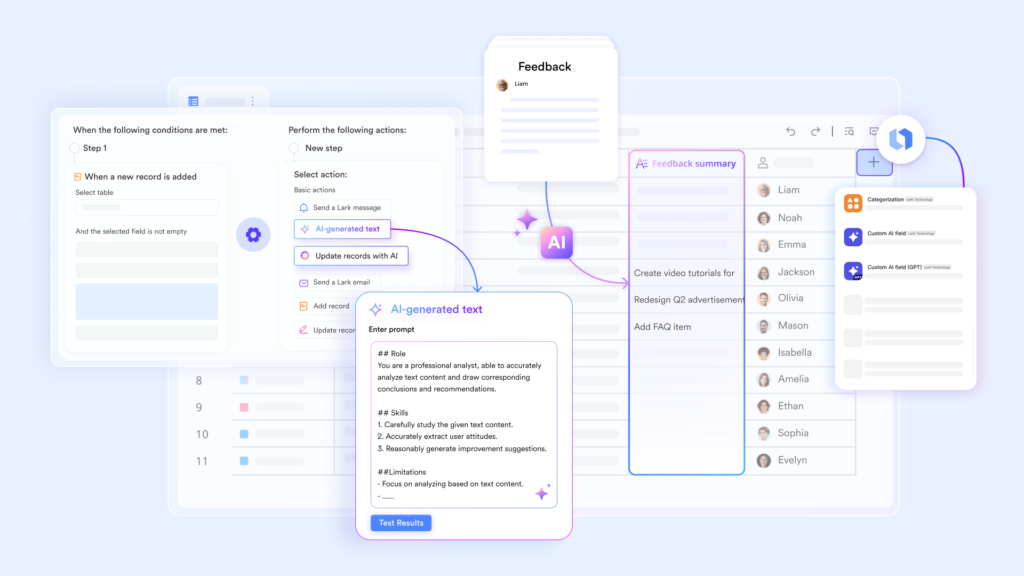
- Single shared database with real-time updates. Every record in Lark Base reflects the current state of the project the moment any team member updates it. There is no version of a record that is current for one person and outdated for another, because there is only one record and it is always current for everyone who has access to it.
- Automated dependency notifications. When a record that another team member’s work depends on changes status, the dependent team member receives an automatic notification. The assumption that a dependency has been resolved is replaced by a confirmed notification that it has been, so work that was waiting on an unconfirmed assumption stops proceeding on the wrong basis.
The result: The operational data that each team member is working from is always the same data, current to the same moment. The rework that results from two people working from different versions of reality disappears because there is only one version of reality, and it is continuously updated.
Approval clarity that prevents speculative work with Lark Approval
Speculative work is one of the most consistent sources of invisible rework. A team member is waiting for an approval that has not arrived. They start working on the next step anyway because they are confident the approval will come through and they do not want to lose momentum. The approval arrives with conditions they did not anticipate, and the work they did speculatively turns out to require significant revision.
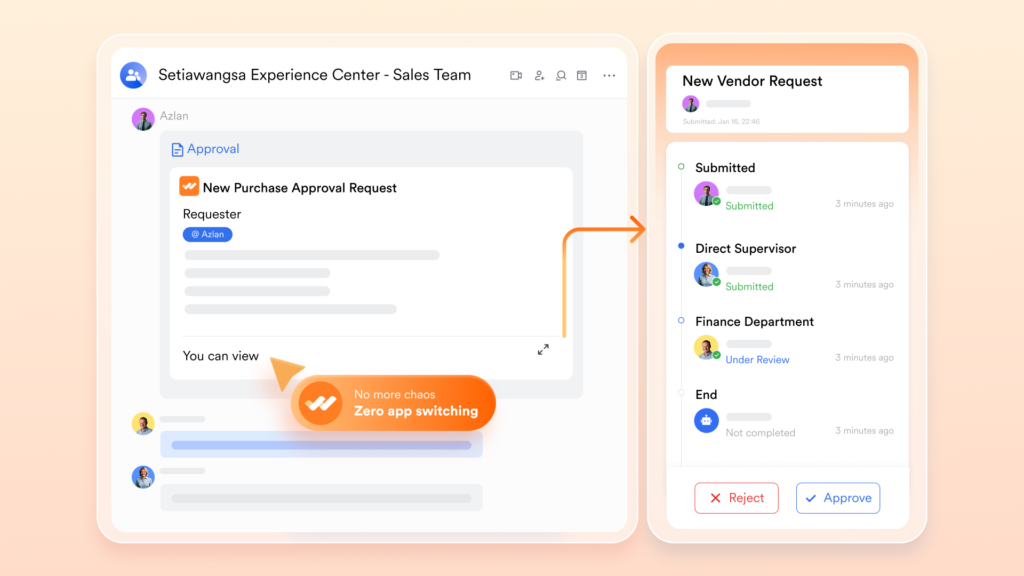
- Live approval status visible to the submitter. Any team member waiting for an approval can see exactly which stage their request is at and which approver currently holds it in real time, without sending any messages. The decision to proceed speculatively is based on informed judgment about the approval’s likely outcome rather than on anxiety about waiting.
- “Approval Notifications” that reach the right team the moment a decision is made. When an approval is granted, every downstream team member who was waiting to proceed receives an immediate notification. The time between the approval being given and the downstream work beginning is reduced from hours or days to minutes.
The result: The team never proceeds on the assumption that an approval has happened when it has not. The speculative work that becomes rework when the approval arrives with unexpected conditions stops being a recurring pattern.
A knowledge base that eliminates process rework with Lark Wiki
Process rework is distinct from requirement rework. It happens when a team member follows a process that has been updated without their knowledge, producing work that satisfies the old process but not the current one. This is particularly common in organizations that update their processes frequently and rely on informal communication to notify the people affected.
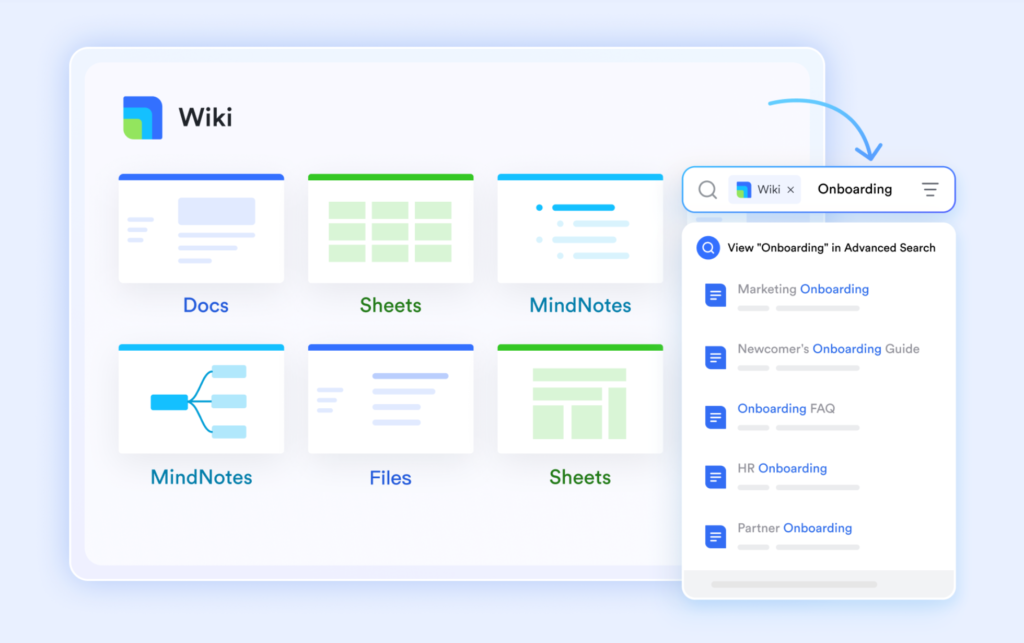
- “Advanced Search” for current process retrieval. Any team member who needs to verify the current version of a process can search the Wiki and find the most recent document in seconds, without having to ask whether the version they are working from is still current.
- “Rich Content” for complete process documentation. Wiki pages can carry the full process reference, including embedded checklists, decision trees, and linked templates, in a single organized location. The team member who follows a process finds everything they need to follow it correctly in one place rather than assembling the procedure from multiple disconnected sources.
The result: Team members always follow the current version of every process because the current version is always findable and the previous version is clearly superseded in the version history. The rework that results from following an outdated process becomes a structural impossibility rather than a recurring operational cost.
Bonus: Why rework is so hard to reduce without the right infrastructure
Rework is difficult to reduce through cultural interventions because its causes are structural. Asking team members to communicate more clearly does not prevent a brief from being ambiguous if the brief tool does not support collaborative development. Asking people to keep each other informed does not prevent requirement changes from reaching some team members and not others if the communication tool does not guarantee universal delivery. Asking people to check whether a dependency has been resolved does not prevent speculative work if checking requires sending a message and waiting for a reply.
Tools like Jira and monday.com reduce rework in the task tracking layer. Notion and Confluence reduce it in the documentation layer. Slack reduces it in the communication layer. But none of these tools addresses all three layers simultaneously, and the rework that originates at the boundary between layers persists regardless. For teams evaluating Google Workspace pricing, the subscription cost is often only the starting point. Many companies still need separate tools for project tracking, knowledge management, and approval workflows, creating additional handoff points where rework can emerge. Lark reduces those boundaries by keeping these workflows in one environment.
Conclusion
Invisible rework is not reduced by working more carefully. It is reduced by building a workspace where the conditions that generate it, ambiguous briefs, divergent requirements, outdated data, speculative work, and stale processes, are eliminated at the infrastructure level before they have a chance to produce work that has to be done twice. A connected set of productivity tools that makes every brief collaborative, every requirement change universal, every data record current, every approval status visible, and every process findable is how organizations drive their invisible rework cost toward zero.


How to Spot a More Trustworthy Phone Tarot Service
Beware, the cult that victimized teenagers has brought its performances to Japan

How Does the FRM Exam Help Build a Career in Risk Analytics?

What Happens When You Stop Taking Ozempic For Weight Loss?

Generative Furniture Modeling Review 2026: Automating Prototyping Workflows
Why Healthcare Press Releases Need Regulatory Awareness
How to Turn Your Bahrain Registration Into a Competitive Advantage

Company License in Saudi Arabia: Matching Activity for UK Firms

AI Image Generators for Photography: Enhancing, Upscaling, and Creating

How-To Guide: The Most Effective Organic Methods to Scale Your Online Presence This Year
How to Spot a More Trustworthy Phone Tarot Service
Beware, the cult that victimized teenagers has brought its performances to Japan
How Does the FRM Exam Help Build a Career in Risk Analytics?
What Happens When You Stop Taking Ozempic For Weight Loss?
Generative Furniture Modeling Review 2026: Automating Prototyping Workflows
Why Healthcare Press Releases Need Regulatory Awareness
How to Turn Your Bahrain Registration Into a Competitive Advantage
Company License in Saudi Arabia: Matching Activity for UK Firms
AI Image Generators for Photography: Enhancing, Upscaling, and Creating
How-To Guide: The Most Effective Organic Methods to Scale Your Online Presence This Year

The Private World of Marina Pearl LeBlanc, Matt LeBlanc’s Only Child

What is Shoujo Ramune? The Comprehensive Guide

Who is Christina Erika Carandini Lee? Everything About Christopher Lee’s Daughter

Who is Amra Nor Jenkins? The Untold Story About Jeezy’s Daughter

The Untold Truth of William Mapel: A Deep Dive into His Personal Life

The Untold Story of Denika Kisty: Her Family, Net Worth, and More

The Rise of Ryan Nikolaos Sampras: From Humble Beginnings to Stardom

Who is Nicoletta Ruhl? Age, Family, Bio

William Givens Jensen Today: What We Know About Robin Givens’ Son

Who Is Stephanie Sarkisian? All You Need To Know AboutSteve Sarkisian’s Ex-Wife
-
 Celebrity1 year ago
The Private World of Marina Pearl LeBlanc, Matt LeBlanc’s Only Child
-
 Entertainment2 years ago
What is Shoujo Ramune? The Comprehensive Guide
-
 Celebrity2 years ago
Who is Christina Erika Carandini Lee? Everything About Christopher Lee’s Daughter
-
 Life Style2 years ago
Who is Amra Nor Jenkins? The Untold Story About Jeezy’s Daughter
-
 Celebrity2 years ago
The Untold Truth of William Mapel: A Deep Dive into His Personal Life
-
 Celebrity2 years ago
The Untold Story of Denika Kisty: Her Family, Net Worth, and More
-
 Celebrity2 years ago
The Rise of Ryan Nikolaos Sampras: From Humble Beginnings to Stardom
-
 Life Style2 years ago
Who is Nicoletta Ruhl? Age, Family, Bio