Games
What Makes Online Slots Click as Casual Entertainment for Busy Adults


Online slots have quietly grown into one of the most popular forms of digital entertainment. According to the UK Gambling Commission, online slots generated £4.2 billion in gross gambling yield between 2024 and 2025, accounting for the largest single share of the country’s remote gaming sector.
That did not happen by accident. The figure reflects something real about how these games fit into the way people relax and spend their free time. So what is it about online slots that keeps drawing people in?
No Learning Curve, No Commitment
The single biggest reason slots work for casual players is how little they ask of you upfront. There are no hands to memorise, no strategies to study, and no opponents to read. Take any of the popular Pragmatic slots you can explore on Clash of Slots or the official developer website, and you will notice that even the most feature-packed titles explain themselves within a few spins.
A player opens a game, sets a stake, and hits spin. That simplicity removes a barrier that puts a lot of people off other casino games like poker or blackjack, where some background knowledge is a must before you play.
The accessibility goes beyond mechanics, too. Online slots run fast on mobile, load quickly, and do not require an account to browse. For someone with 10–20 minutes to spare, that matters.
Sessions That Fit Around Real Life
Online slots are one of the few entertainment formats genuinely built around short windows of free time.
Short by Design
One of the more telling UKGC statistics is that the average online slots session lasts around 17 minutes. That is not a flaw. It is part of why the format works.
Most forms of digital entertainment either demand a longer time investment or offer something almost too passive, like scrolling or background music. Slots sit in an interesting middle ground. A session can be genuinely short without feeling incomplete.
Flexible Stakes Make It Accessible
Bet sizes across the slots market typically start at a few pence per spin and scale upward, which means players can set a fixed budget and know roughly how long their session will last. This kind of control is part of why the format appeals to people who want entertainment within defined limits instead of an open-ended spend.
It also explains why developers like Pragmatic Play, whose broader influence on the iGaming space is well documented, have focused heavily on low minimum stakes and mobile-first design across their catalogue.
Here is how the flexibility of online slots compares to other popular entertainment options:
| Entertainment type | Typical session length | Cost control | Requires prior knowledge |
| Online slots | 10 to 30 minutes | High (set stake per spin) | No |
| Poker | 1 to 3 hours | Moderate | Yes |
| Video games | 30 minutes to several hours | Fixed (purchase cost) | Varies |
| Streaming a film | 90 to 150 minutes | Fixed (subscription) | No |
The short session length and granular cost control make slots one of the few entertainment formats where the player genuinely sets both the pace and the spend.
Theme and Variety Drive Repeat Play
Part of what keeps casual players returning is that online slots rarely feel repetitive across a portfolio.
A Catalogue for Every Taste
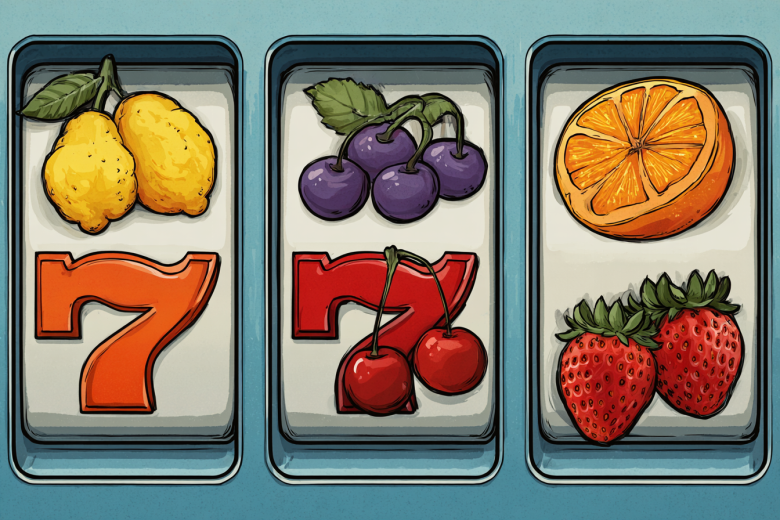
Modern online slots are built around themes, just as television genres are. Ancient mythology, fishing trips, candy worlds, Egyptian tombs, Wild West settings, underwater adventures — the range is wide enough that thematic fatigue is rarely a problem. Titles like Gates of Olympus, Sweet Bonanza, and the Big Bass series have each built genuine fanbases, partly through strong theming and partly through mechanics that stay engaging across many sessions.
The emotional connection between a player and a familiar theme — whether a mythology setting, an adventure concept, or something rooted in everyday life — is a real driver of return visits. It is the same mechanism that makes people gravitate toward specific film genres or music styles.
Bonus Features as Entertainment in Themselves
The mechanics inside modern slots have moved beyond spinning reels and matching symbols. Free spins rounds, tumbling reels, multipliers, and bonus buy options give players something to anticipate during a session. These features function like reward loops in mainstream video games — they create a sense of progress and payoff that keeps the experience from feeling flat.
The comparison to gaming is not accidental. Engagement strategies used in online slots are strikingly similar to those found in some of the world’s most popular video games, with the psychological hooks that keep players active. The anticipation of a bonus round, for instance, works on the same variable reward principle as a loot box or a seasonal prize in a battle royale game.
Here are some of the modern mechanics that hook players:
- Tumbling reels: Winning symbols disappear and are replaced by new ones, allowing multiple wins from a single spin.
- Multiplier wilds: Wild symbols that not only substitute for others but also multiply the value of a win.
- Free spins rounds: Triggered by scatter symbols, these give players a set number of spins at no additional cost, often with enhanced mechanics active.
- Bonus buy: Allows players to pay a fixed amount to access the bonus round directly, skipping the base game entirely.
- Megaways: A dynamic reel system that changes the number of symbols per reel on every spin, creating hundreds of possible ways to win.
These features are not just about the chance of winning. They give each session a rhythm and something to work toward.
Who Actually Plays
The online slots audience is broader than the format’s reputation might suggest. According to the UKGC survey, overall participation in online gambling is highest among adults aged 45 to 54, with the 25 to 34 bracket showing the strongest rates when lottery-only players are excluded. Men are more likely to gamble online than women, though the gap narrows considerably when it comes to casual, entertainment-led play rather than high-stakes activity.
What stands out is the motivation data. The GSGB found that 72% of people who gamble cite fun as one of their main reasons for doing so, with escaping boredom a notable secondary driver among the 25 to 34 age group. That sits closer to how people describe choosing a streaming service or a mobile game than how gambling is traditionally framed.
What the Format Gets Right
Online slots work for casual players for reasons that go beyond luck or novelty. The format removes the need for prior knowledge, fits naturally into short gaps in the day, gives players genuine control over their spend, and offers enough variety that the experience stays fresh. That combination is genuinely difficult to find in a single entertainment format, and it is the clearest explanation for why the audience has grown considerably over the past few years.
Read More Find Magazine


Healing the Whole Person: The Ultimate Guide to Dual Diagnosis Treatment at LIV Recovery Center

Do Watch Colors Match Seasons?

Choosing the Right Cavitation Machine: What Every Clinic Owner Should Know Before Buying

How to Spot a More Trustworthy Phone Tarot Service
Beware, the cult that victimized teenagers has brought its performances to Japan

How Does the FRM Exam Help Build a Career in Risk Analytics?

What Happens When You Stop Taking Ozempic For Weight Loss?

Generative Furniture Modeling Review 2026: Automating Prototyping Workflows
Why Healthcare Press Releases Need Regulatory Awareness
How to Turn Your Bahrain Registration Into a Competitive Advantage
Healing the Whole Person: The Ultimate Guide to Dual Diagnosis Treatment at LIV Recovery Center
Do Watch Colors Match Seasons?
Choosing the Right Cavitation Machine: What Every Clinic Owner Should Know Before Buying
How to Spot a More Trustworthy Phone Tarot Service
Beware, the cult that victimized teenagers has brought its performances to Japan
How Does the FRM Exam Help Build a Career in Risk Analytics?
What Happens When You Stop Taking Ozempic For Weight Loss?
Generative Furniture Modeling Review 2026: Automating Prototyping Workflows
Why Healthcare Press Releases Need Regulatory Awareness
How to Turn Your Bahrain Registration Into a Competitive Advantage

The Private World of Marina Pearl LeBlanc, Matt LeBlanc’s Only Child

What is Shoujo Ramune? The Comprehensive Guide

Who is Christina Erika Carandini Lee? Everything About Christopher Lee’s Daughter

Who is Amra Nor Jenkins? The Untold Story About Jeezy’s Daughter

The Untold Truth of William Mapel: A Deep Dive into His Personal Life

Who is Nicoletta Ruhl? Age, Family, Bio

The Untold Story of Denika Kisty: Her Family, Net Worth, and More

The Rise of Ryan Nikolaos Sampras: From Humble Beginnings to Stardom

William Givens Jensen Today: What We Know About Robin Givens’ Son

Meet Dominique Boxley: Anthony Fantano’s Mysterious and Supportive Partner
-
 Celebrity1 year ago
The Private World of Marina Pearl LeBlanc, Matt LeBlanc’s Only Child
-
 Entertainment2 years ago
What is Shoujo Ramune? The Comprehensive Guide
-
 Celebrity2 years ago
Who is Christina Erika Carandini Lee? Everything About Christopher Lee’s Daughter
-
 Life Style2 years ago
Who is Amra Nor Jenkins? The Untold Story About Jeezy’s Daughter
-
 Celebrity2 years ago
The Untold Truth of William Mapel: A Deep Dive into His Personal Life
-
 Life Style2 years ago
Who is Nicoletta Ruhl? Age, Family, Bio
-
 Celebrity2 years ago
The Untold Story of Denika Kisty: Her Family, Net Worth, and More
-
 Celebrity2 years ago
The Rise of Ryan Nikolaos Sampras: From Humble Beginnings to Stardom