Tech
5 Versatile Linear Actuators for Demanding Industrial Environments

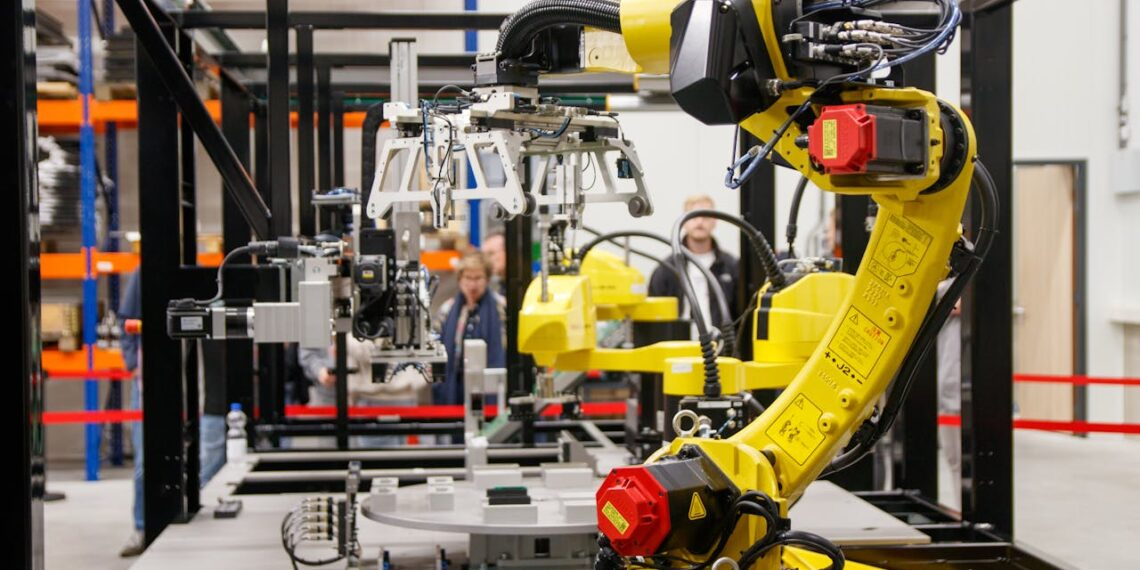
Selecting the right linear actuator for demanding industrial environments isn’t something to rush, it requires thoughtful consideration of load requirements, speed specifications, environmental conditions, and how well the system integrates with existing equipment. Ball screw actuators excel when precision-critical applications involve substantial loads, while belt-driven systems dominate scenarios requiring high-speed movement across long strokes. Rodless pneumatic cylinders offer space-efficient solutions perfect for clean manufacturing environments, and intelligent electric actuators provide the flexibility and connectivity that modern smart factories increasingly demand.
Understanding the Critical Role of Linear Actuators in Industrial Applications
Linear actuators are the unsung heroes of modern industrial automation, quietly converting rotational motion into precise linear movement that keeps manufacturing processes humming along. In environments where reliability isn’t just preferred but absolutely essential, choosing the right linear actuator makes all the difference between smooth operations and unexpected shutdowns that drain resources. These sophisticated mechanical workhorses face some seriously tough conditions, extreme temperatures that would make most people uncomfortable, heavy loads that test their limits, contamination from dust and debris, and operation cycles that just don’t quit. Industrial facilities across the spectrum, from automotive assembly lines to food processing plants, depend on linear actuators to position materials exactly where they need to be, adjust equipment settings on the fly, and automate those repetitive tasks that require unwavering precision.
Heavy-Duty Ball Screw Actuators for Precision and Load Capacity
Ball screw actuators have earned their reputation as the gold standard when applications demand exceptional precision paired with serious load-bearing muscle. Here’s what makes them special: these robust systems use recirculating ball bearings that roll smoothly between the screw shaft and nut, slashing friction while pushing efficiency ratings well beyond 90 percent. The mechanical advantage they provide is remarkable, they can handle loads ranging from hundreds to thousands of pounds while maintaining positioning accuracy that measures in micrometers. Manufacturing environments particularly appreciate ball screw actuators in CNC machinery, injection molding equipment, and automated assembly stations where repeatability isn’t negotiable, it’s everything.
Belt, Driven Linear Actuators for High-Speed Applications
When industrial processes need rapid positioning across long distances, belt-driven linear actuators step up as the go-to solution for achieving velocities that leave other actuator technologies in the dust. These systems employ reinforced timing belts or synchronous belts connecting the drive mechanism to a carriage assembly, enabling travel speeds that can exceed several meters per second while keeping positioning accuracy within acceptable ranges. Packaging lines, material handling systems, and automated storage and retrieval operations regularly incorporate belt-driven actuators to maximize throughput without gambling with reliability. The lightweight moving components reduce inertial loads considerably, allowing motors to accelerate and decelerate rapidly without guzzling excessive energy or putting mechanical components under unnecessary stress.
Rodless Pneumatic Cylinders for Clean and Flexible Motion Control
Rodless pneumatic cylinders offer an elegant workaround for industrial environments where traditional rod-style cylinders just won’t cut it due to space constraints or stroke length requirements. These innovative actuators keep the piston assembly entirely within the cylinder body, using an external carriage that follows the internal piston position through magnetic coupling or mechanical slot mechanisms. The compact profile makes them perfect for applications in tight spaces where machinery footprints need to stay small without sacrificing functionality. Food processing facilities and pharmaceutical manufacturing operations particularly favor rodless pneumatic actuators for their clean operation and compatibility with stringent hygiene standards, since well-designed units eliminate the external rod that could potentially harbor unwanted contaminants. When automating packaging lines or material handling processes, professionals who need to test motion control systems in clean environments rely on the actuator to ensure contamination-free operation. The smooth, continuous motion profiles achievable with quality pneumatic systems reduce mechanical shock and vibration, which extends equipment lifespan while improving product quality in sensitive applications. There’s also a built-in safety feature: pneumatic actuators offer inherent overload protection since compressed air systems naturally limit force output, preventing damage to workpieces or tooling when unexpected obstructions appear.
Electric Linear Actuators with Integrated Controllers for Smart Manufacturing
The integration of advanced electronics into electric linear actuators has genuinely transformed these devices into intelligent positioning systems capable of playing active roles in Industry 4. 0 manufacturing ecosystems. Modern electric actuators come equipped with built-in controllers, position feedback sensors, and communication interfaces that enable seamless integration with programmable logic controllers and industrial networks. These smart actuators can execute complex motion profiles, perform self-diagnostics, and report operational data that maintenance teams leverage for predictive maintenance strategies that prevent problems before they happen.
Conclusion
By carefully matching actuator characteristics to specific application demands, industrial engineers can optimize system performance, minimize maintenance headaches, and achieve the reliability that continuous production operations absolutely require.
Read More at Find Magazine


How to Spot a More Trustworthy Phone Tarot Service
Beware, the cult that victimized teenagers has brought its performances to Japan

How Does the FRM Exam Help Build a Career in Risk Analytics?

What Happens When You Stop Taking Ozempic For Weight Loss?

Generative Furniture Modeling Review 2026: Automating Prototyping Workflows
Why Healthcare Press Releases Need Regulatory Awareness
How to Turn Your Bahrain Registration Into a Competitive Advantage

Company License in Saudi Arabia: Matching Activity for UK Firms

AI Image Generators for Photography: Enhancing, Upscaling, and Creating

How-To Guide: The Most Effective Organic Methods to Scale Your Online Presence This Year
How to Spot a More Trustworthy Phone Tarot Service
Beware, the cult that victimized teenagers has brought its performances to Japan
How Does the FRM Exam Help Build a Career in Risk Analytics?
What Happens When You Stop Taking Ozempic For Weight Loss?
Generative Furniture Modeling Review 2026: Automating Prototyping Workflows
Why Healthcare Press Releases Need Regulatory Awareness
How to Turn Your Bahrain Registration Into a Competitive Advantage
Company License in Saudi Arabia: Matching Activity for UK Firms
AI Image Generators for Photography: Enhancing, Upscaling, and Creating
How-To Guide: The Most Effective Organic Methods to Scale Your Online Presence This Year

The Private World of Marina Pearl LeBlanc, Matt LeBlanc’s Only Child

What is Shoujo Ramune? The Comprehensive Guide

Who is Christina Erika Carandini Lee? Everything About Christopher Lee’s Daughter

Who is Amra Nor Jenkins? The Untold Story About Jeezy’s Daughter

The Untold Truth of William Mapel: A Deep Dive into His Personal Life

The Untold Story of Denika Kisty: Her Family, Net Worth, and More

The Rise of Ryan Nikolaos Sampras: From Humble Beginnings to Stardom

Who is Nicoletta Ruhl? Age, Family, Bio

William Givens Jensen Today: What We Know About Robin Givens’ Son

Who Is Stephanie Sarkisian? All You Need To Know AboutSteve Sarkisian’s Ex-Wife
-
 Celebrity1 year ago
The Private World of Marina Pearl LeBlanc, Matt LeBlanc’s Only Child
-
 Entertainment2 years ago
What is Shoujo Ramune? The Comprehensive Guide
-
 Celebrity2 years ago
Who is Christina Erika Carandini Lee? Everything About Christopher Lee’s Daughter
-
 Life Style2 years ago
Who is Amra Nor Jenkins? The Untold Story About Jeezy’s Daughter
-
 Celebrity2 years ago
The Untold Truth of William Mapel: A Deep Dive into His Personal Life
-
 Celebrity2 years ago
The Untold Story of Denika Kisty: Her Family, Net Worth, and More
-
 Celebrity2 years ago
The Rise of Ryan Nikolaos Sampras: From Humble Beginnings to Stardom
-
 Life Style2 years ago
Who is Nicoletta Ruhl? Age, Family, Bio