Tech
Why 16 Amp MCBs Are the Standard Choice for Socket Circuits

The use of miniature circuit breakers, or MCBs, is a vital element in present-day electrical systems. They offer automatic overcurrent protection, short circuit and electrical fault protection to keep the wiring and appliances used safe. One of the many types of MCB ratings has become the 16 Amp MCB, which has become the standard choice of socket circuits in residential and commercial environments. The reason behind this wide usage is not accidental but rather the judicious compromise of the technical demands, safety regulations, and usefulness. HUYU Electric has not been left out in the trend in the sense that they have provided high-quality 16 Amp MCBs, which are both internationally certified and can be used in various installations.
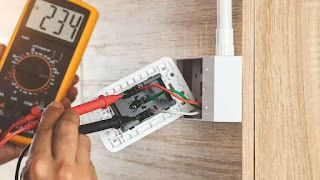
Current Rating and Load Compatibility
The current rating is one of the major causes of the preponderance of 16 Amp MCBs in socket circuits. A 16 Amp breaker can support currents of up to 16 Amps, and this would match relatively well the type of power needed by household and small commercial appliances. Further on, appliances like television, computers, microwave ovens and air conditioners typically fall within the current limits that a 16 Amp MCB is capable of operating at safely. The benefit of this rating on a breaker is to provide sufficient protection without the nuisance of nuisance tripping. Exceeding the current limit of a breaker may cause appliance and wiring damage, whereas underestimating will cause frequent interruptions, so the compromise of 16 Amps should be selected as the most suitable current limit of a standard socket.
Versatility in Configurations
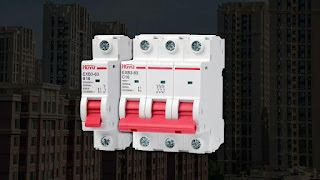
The 16 Amp MCBs are also preferred because they are easy to install. They come in various types, which include single-pole (1P), single-pole with neutral (1P+N), and two-pole (2P) types. In standard socket circuits, single-pole breakers are usually standard and serve to protect the live circuit and also to break the circuit in case of overload or fault. The 1P+N circuit includes safeguarding the neutral wire, which gives full isolation and increases safety. A double-pole MCB is most commonly employed in a circuit where both live and neutral wires need to be tripped at the same time, i.e., in a main isolation system or in some commercial systems. This versatility enables the 16 Amp MCB to be a good selection in various electrical settings.
Tripping Curves and Application Suitability
The other important consideration to be made when choosing 16 Amp MCBs is the tripping curve, which determines the rate at which the breaker reacts to overcurrent. Variants of curves B, C and D are typical. The breakers are sensitive, and they also trip very fast and thus are very useful in breaking long cable runs and also protecting delicate equipment. Curve C breakers are general breakers and are mostly used in socket circuits, and are also very effective in offering reliable protection to the usual appliances and lighting systems. Curve D breakers have a high inrush current capacity, which should not be used on industrial equipment like motors or transformers. Curve C 16 Amp MCBs are the ideal combination of protection and operational reliability, and this is the reason why they are widely used in residential socket circuits.
Breaking Capacity and Safety Considerations
The breaking current of an MCB shows the maximum fault current that the device can interrupt safely. Usually, 16 Amp MCBs are available with 6kA or 10 kA breaking current. Most residential and light commercial use applications need a 6kA breaker, and heavy industrial use needs a 10kA current-carrying capability. The electricians can eliminate the chances of fire and equipment breakage by choosing a 16 Amp MCB with the right cutting capacity to make sure that the socket circuitry is not exposed to sudden spikes and other potential dangers. This is especially necessary in areas that have erratic power or areas where the voltage is subject to variation.
Common Applications in Residential and Commercial Systems
The 16 Amp MCBs are sometimes installed in socket circuits that power the general and office appliances. At home, they secure outlets in the living room, bedrooms, kitchen appliances and entertainment systems. Amp breakers 16 Amp are applied to workstations in an office, small machinery and lighting systems, along with typical plug points in commercial applications. They are very common, so there is uniformity in installation practice; they are easy to maintain, and only a few breaker ratings are required in the same electrical panel.
Global Standards and Certification Compliance
The other important aspect in supporting the use of 16 Amp MCBs in socket circuits is that they have global standards and certifications with regard to safety. The manufacturers, such as HUYU Electric, are reputable and thus make sure that the 16 Amp breakers meet the standards of IEC, CE, CB, CCC, and CQC, among others. Adherence to these certifications ensures uniformity in performance, dependability in tripping characteristics and safety in various electrical systems and areas. In case of international projects or installations where a high level of regulation is required, the usage of certified 16 Amp MCBs is a reassuring factor to both the engineers and the contractor, as well as the end-users. It also enables easier approvals of inspection, and the quality of the electrical installation is maintained at international standards, which further constructs the 16 Amp MCB to be the preferred circuit breaker for socket circuits.
Conclusion
A combination of safety, practicality and versatility has created dominance of 16 Amp MCB in socket circuits. Their present-day rating fits the power needs of the vast majority of households and small commercial equipment. In contrast, their modular designs and tripping features render them versatile for a myriad of purposes. The breaking capacity options will offer new safety against Melbourne fault currents, and the customization opportunities of the manufacturers, such as HUYU Electric, can provide professional and project-specific solutions. Owing to these reasons, the 16 Amp MCB is still preferred to be used in socket circuits, which provide good protection and offer operational efficiency in residential, commercial, and light industrial settings.


Healing the Whole Person: The Ultimate Guide to Dual Diagnosis Treatment at LIV Recovery Center

Do Watch Colors Match Seasons?

Choosing the Right Cavitation Machine: What Every Clinic Owner Should Know Before Buying

How to Spot a More Trustworthy Phone Tarot Service
Beware, the cult that victimized teenagers has brought its performances to Japan

How Does the FRM Exam Help Build a Career in Risk Analytics?

What Happens When You Stop Taking Ozempic For Weight Loss?

Generative Furniture Modeling Review 2026: Automating Prototyping Workflows
Why Healthcare Press Releases Need Regulatory Awareness
How to Turn Your Bahrain Registration Into a Competitive Advantage
Healing the Whole Person: The Ultimate Guide to Dual Diagnosis Treatment at LIV Recovery Center
Do Watch Colors Match Seasons?
Choosing the Right Cavitation Machine: What Every Clinic Owner Should Know Before Buying
How to Spot a More Trustworthy Phone Tarot Service
Beware, the cult that victimized teenagers has brought its performances to Japan
How Does the FRM Exam Help Build a Career in Risk Analytics?
What Happens When You Stop Taking Ozempic For Weight Loss?
Generative Furniture Modeling Review 2026: Automating Prototyping Workflows
Why Healthcare Press Releases Need Regulatory Awareness
How to Turn Your Bahrain Registration Into a Competitive Advantage

The Private World of Marina Pearl LeBlanc, Matt LeBlanc’s Only Child

What is Shoujo Ramune? The Comprehensive Guide

Who is Christina Erika Carandini Lee? Everything About Christopher Lee’s Daughter

Who is Amra Nor Jenkins? The Untold Story About Jeezy’s Daughter

The Untold Truth of William Mapel: A Deep Dive into His Personal Life

The Untold Story of Denika Kisty: Her Family, Net Worth, and More

Who is Nicoletta Ruhl? Age, Family, Bio

The Rise of Ryan Nikolaos Sampras: From Humble Beginnings to Stardom

William Givens Jensen Today: What We Know About Robin Givens’ Son

Who Is Stephanie Sarkisian? All You Need To Know AboutSteve Sarkisian’s Ex-Wife
-
 Celebrity1 year ago
The Private World of Marina Pearl LeBlanc, Matt LeBlanc’s Only Child
-
 Entertainment2 years ago
What is Shoujo Ramune? The Comprehensive Guide
-
 Celebrity2 years ago
Who is Christina Erika Carandini Lee? Everything About Christopher Lee’s Daughter
-
 Life Style2 years ago
Who is Amra Nor Jenkins? The Untold Story About Jeezy’s Daughter
-
 Celebrity2 years ago
The Untold Truth of William Mapel: A Deep Dive into His Personal Life
-
 Celebrity2 years ago
The Untold Story of Denika Kisty: Her Family, Net Worth, and More
-
 Life Style2 years ago
Who is Nicoletta Ruhl? Age, Family, Bio
-
 Celebrity2 years ago
The Rise of Ryan Nikolaos Sampras: From Humble Beginnings to Stardom